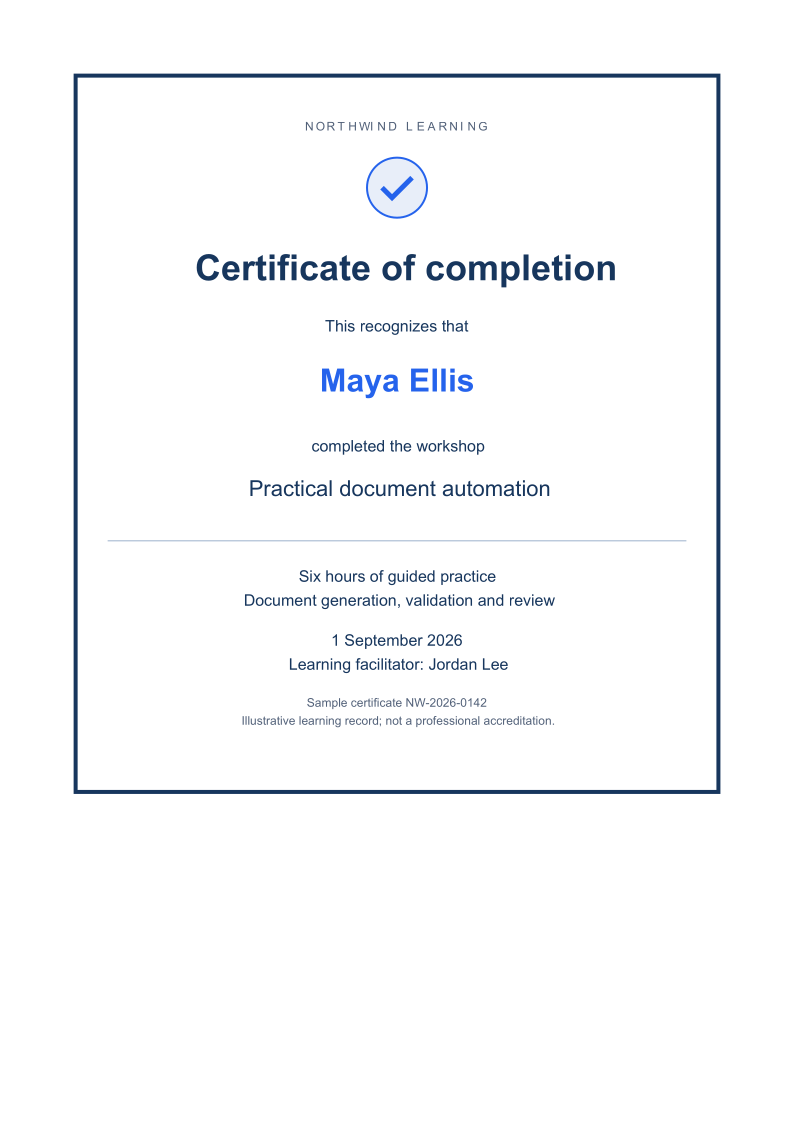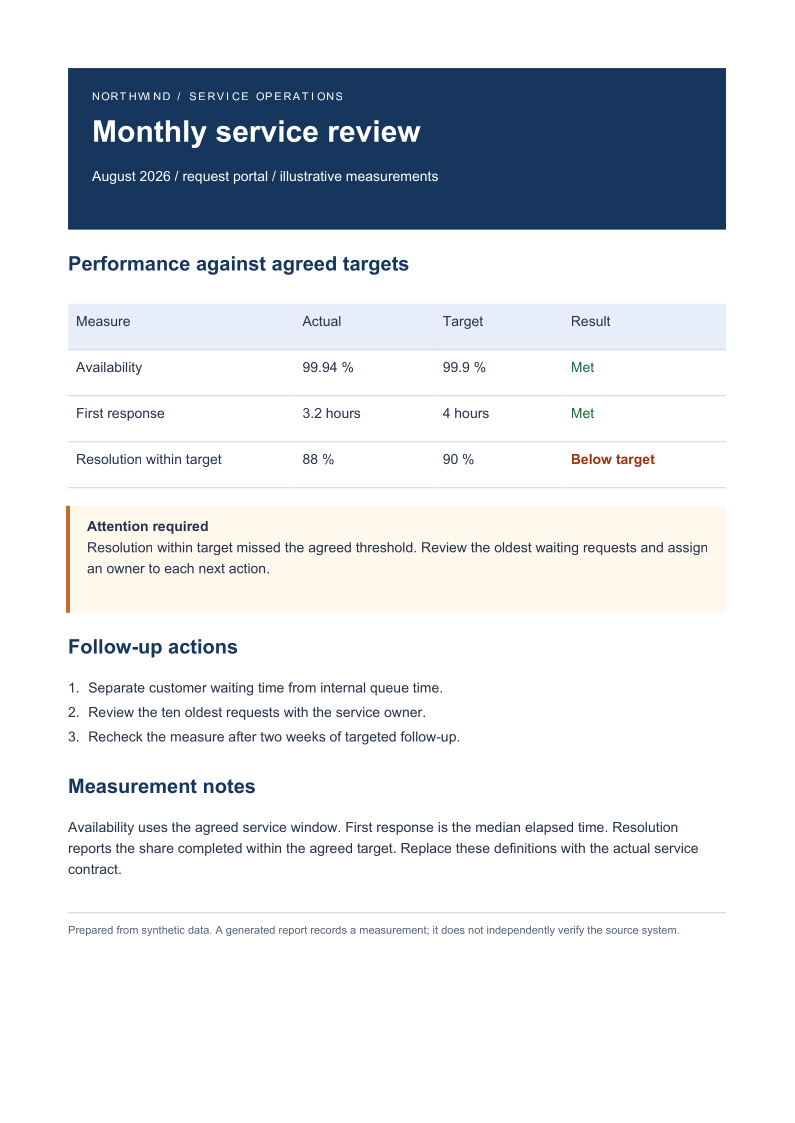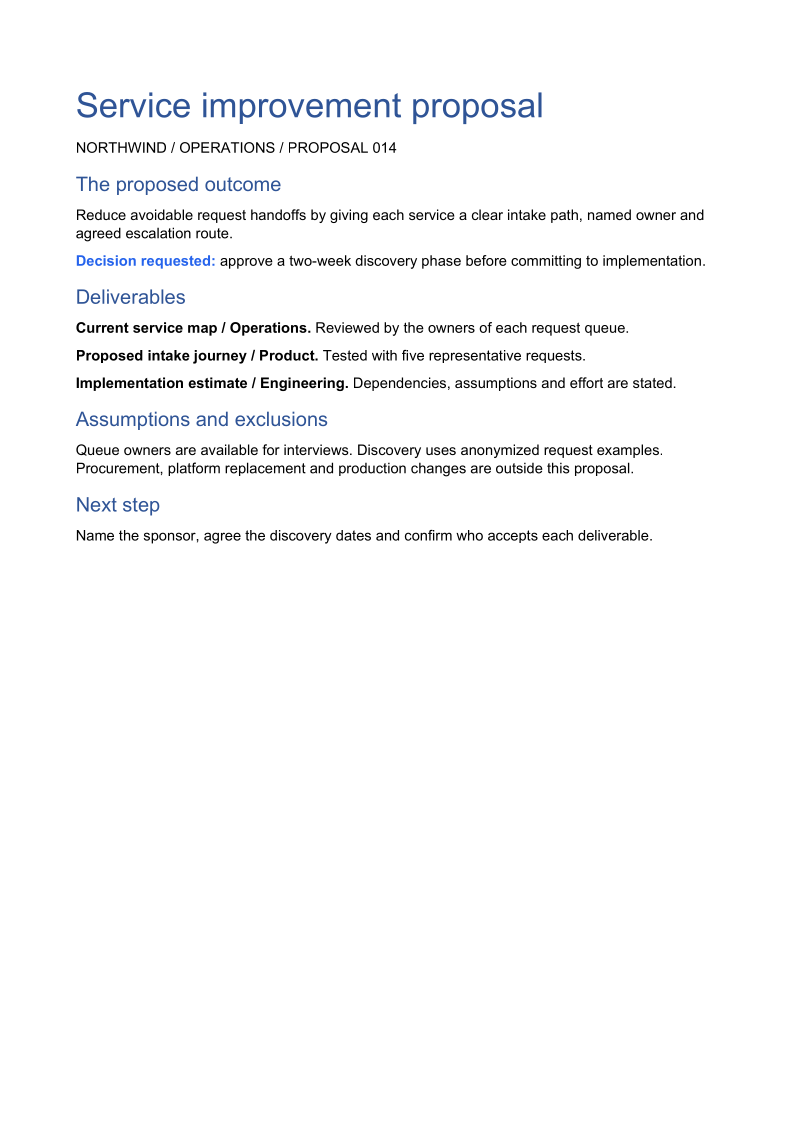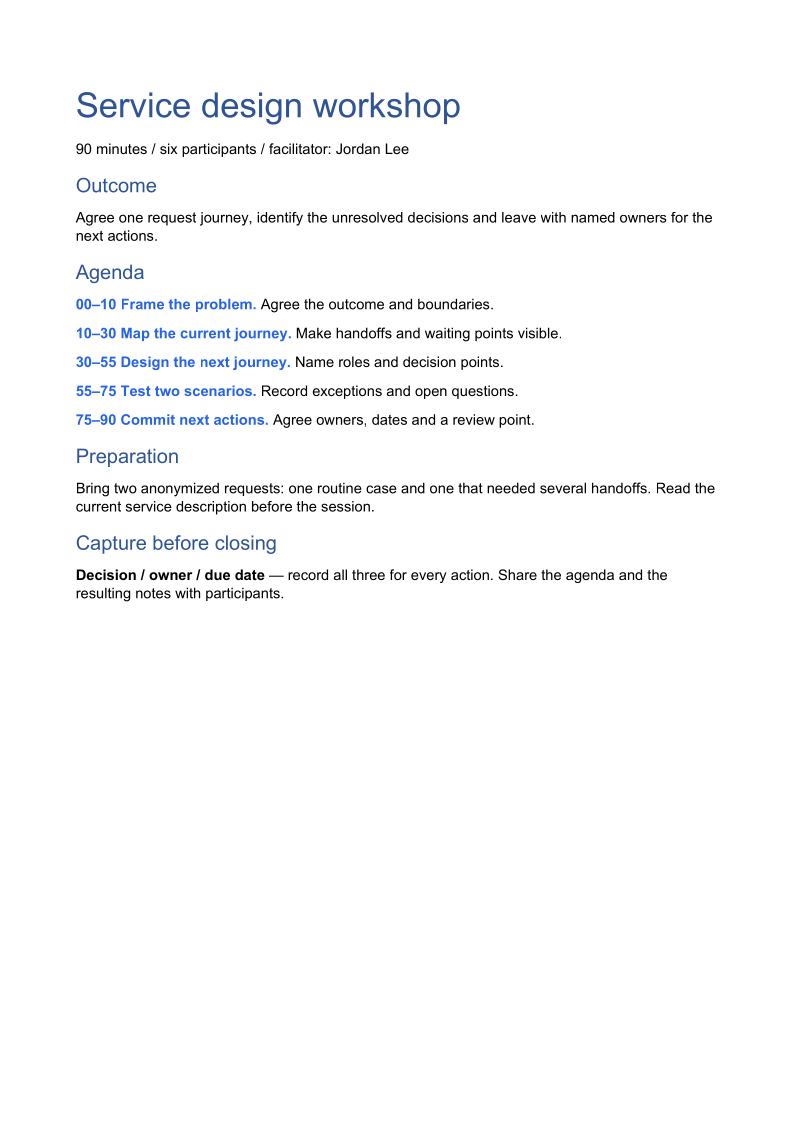
Database data to a finished report
Query SQL Server with DbaClientX, generate Excel, Word, or PDF with OfficeIMO, and publish with PSWriteOffice.
Follow the database reporting guideRun the example, inspect the source, and download the real output. Each card states what the evidence proves and where fidelity is intentionally bounded.
Query SQL Server with DbaClientX, generate Excel, Word, or PDF with OfficeIMO, and publish with PSWriteOffice.
Follow the database reporting guide12 workflows

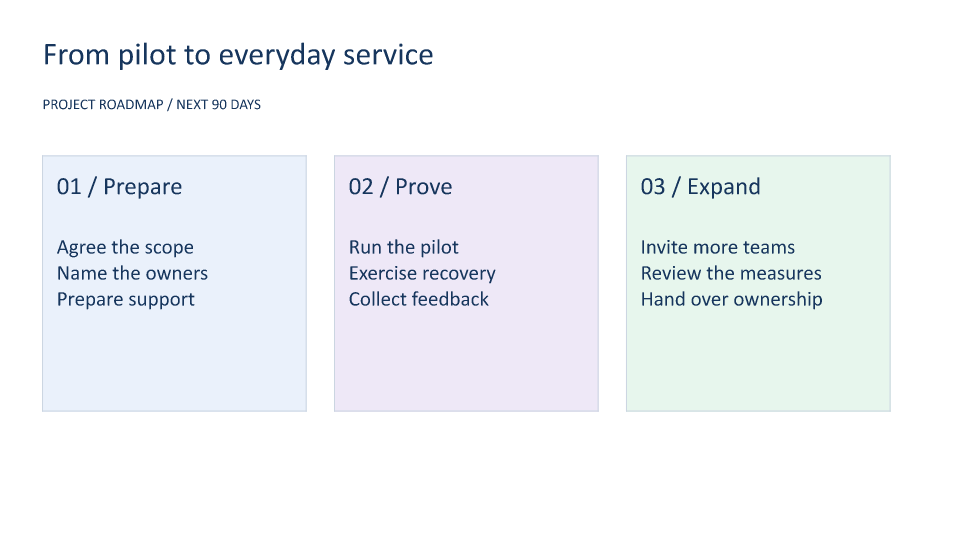
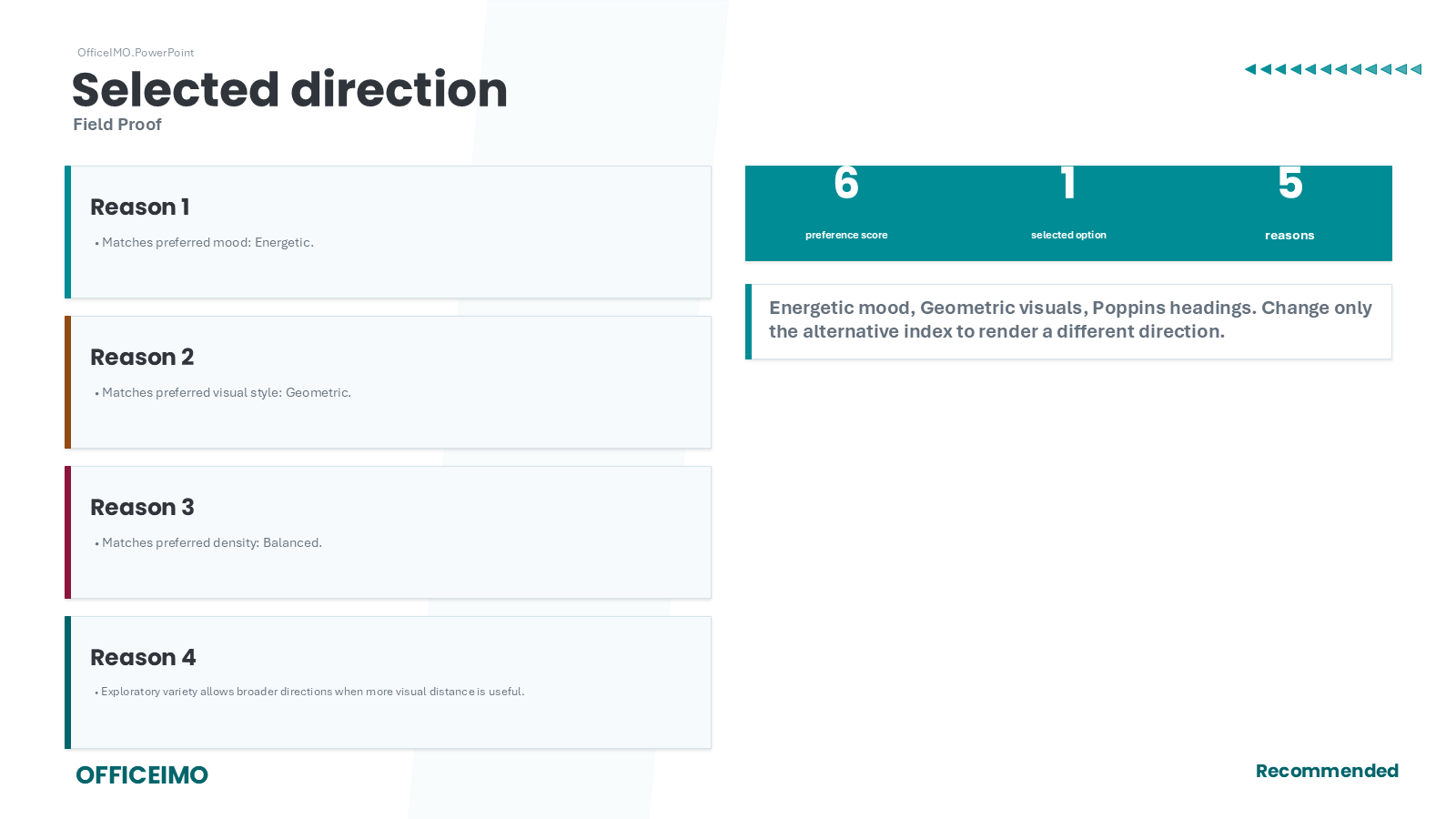
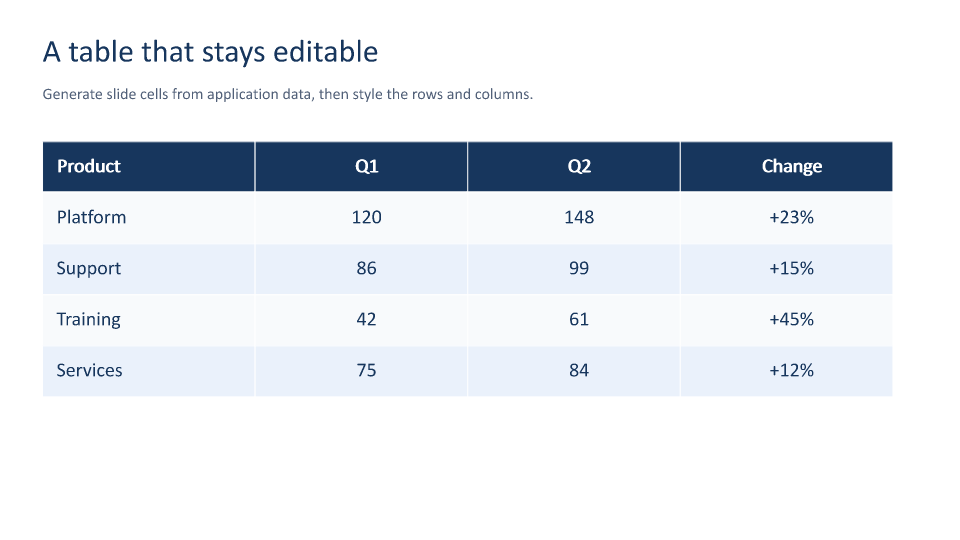
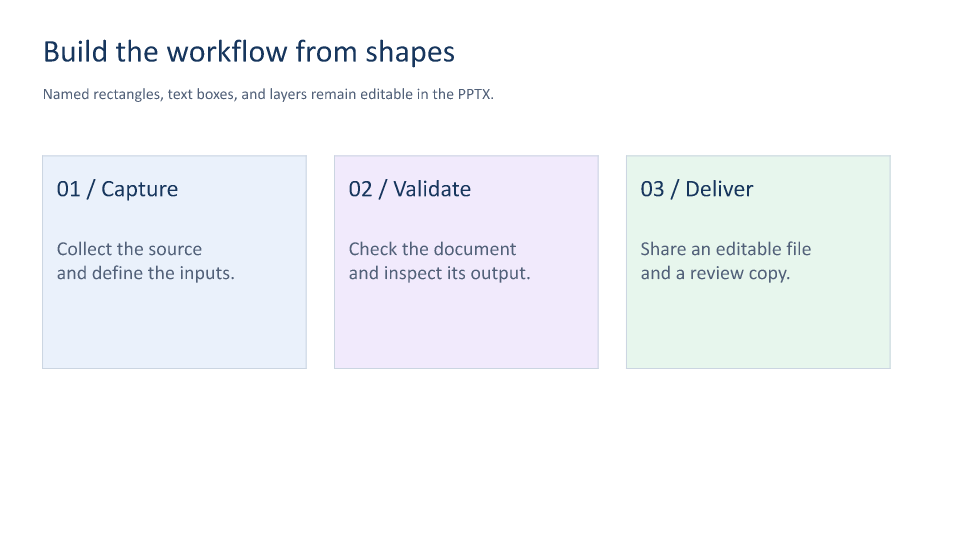
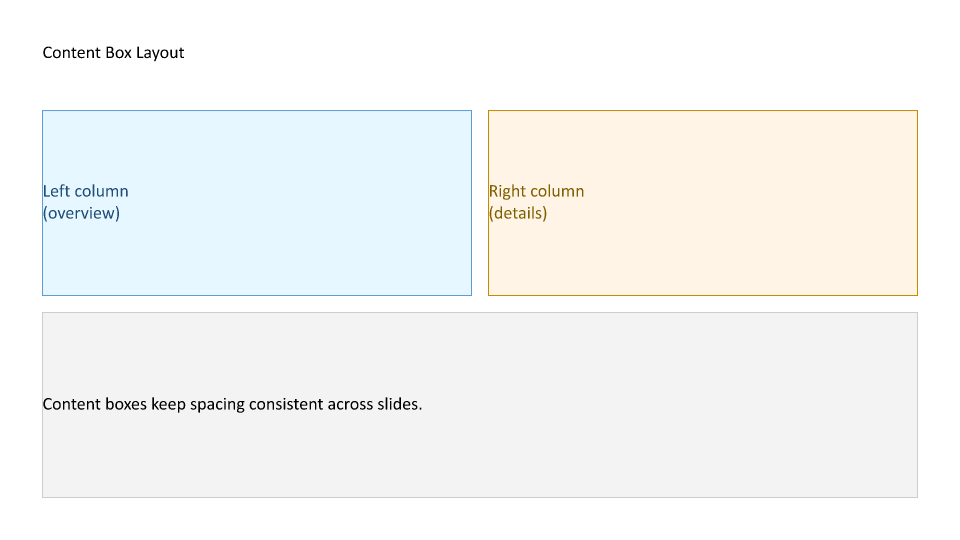
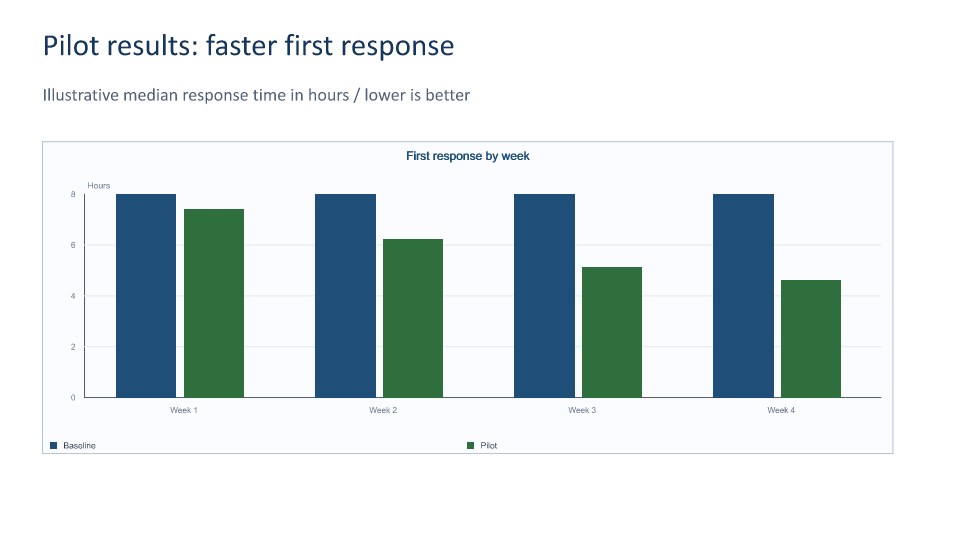
Generate editable slides from a brand brief, rank deterministic design alternatives, and validate the resulting Open XML package.
The downloadable deck is generated by the linked example and passes Open XML validation. The preview is a rendered slide from that example.
This proves package structure and the selected rendered slide. It does not promise pixel parity with every PowerPoint desktop version, font set, or theme.

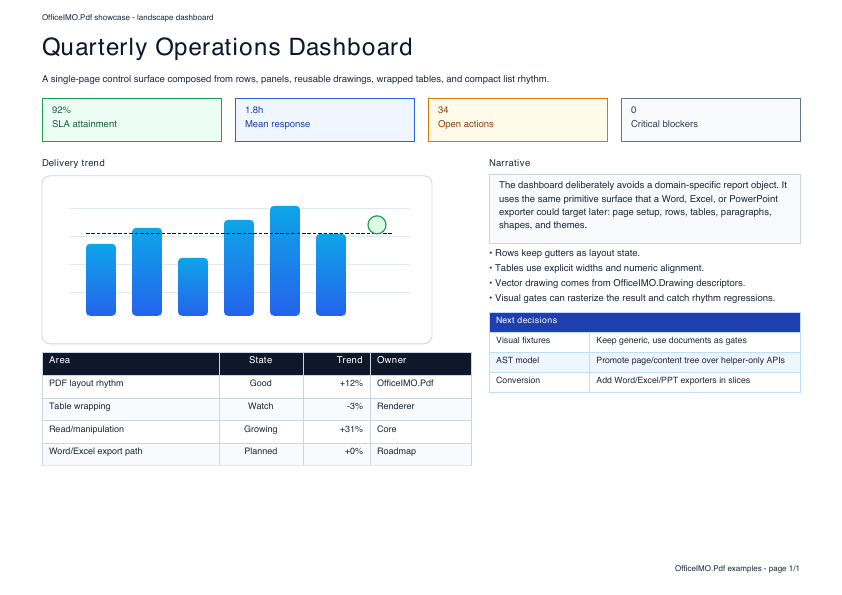
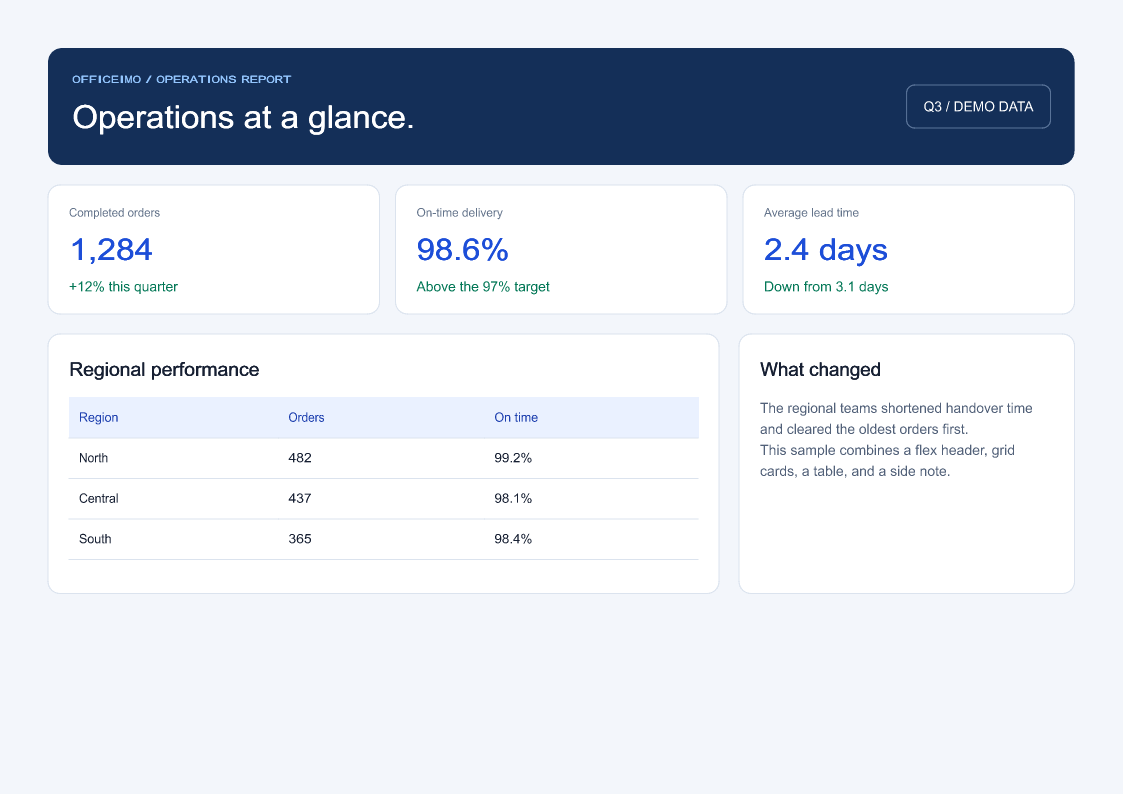
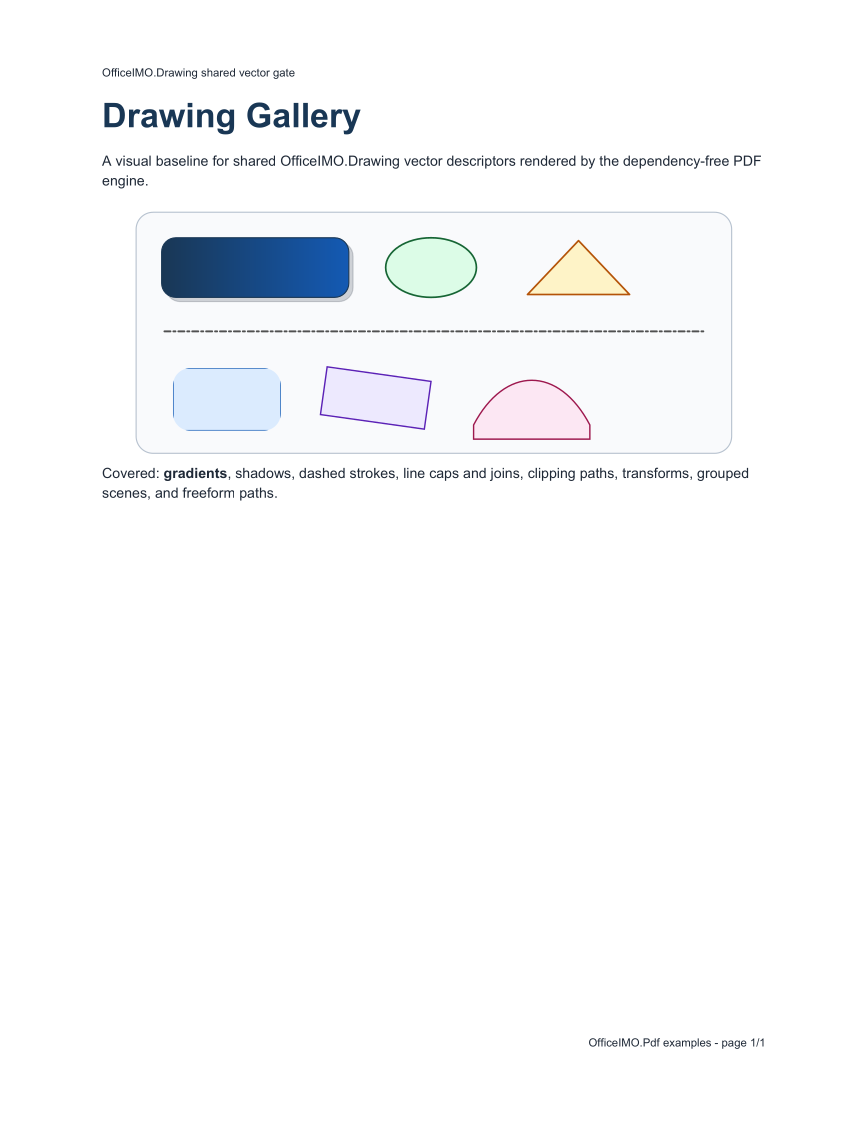
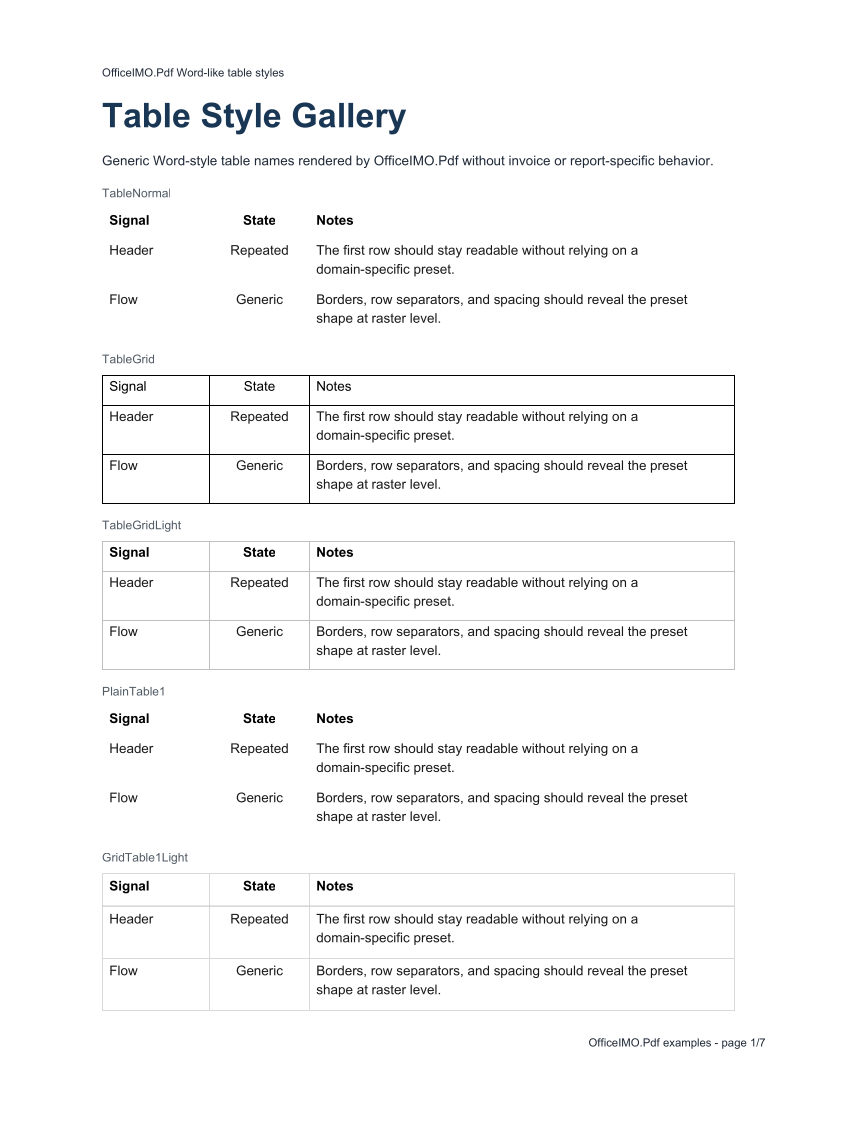
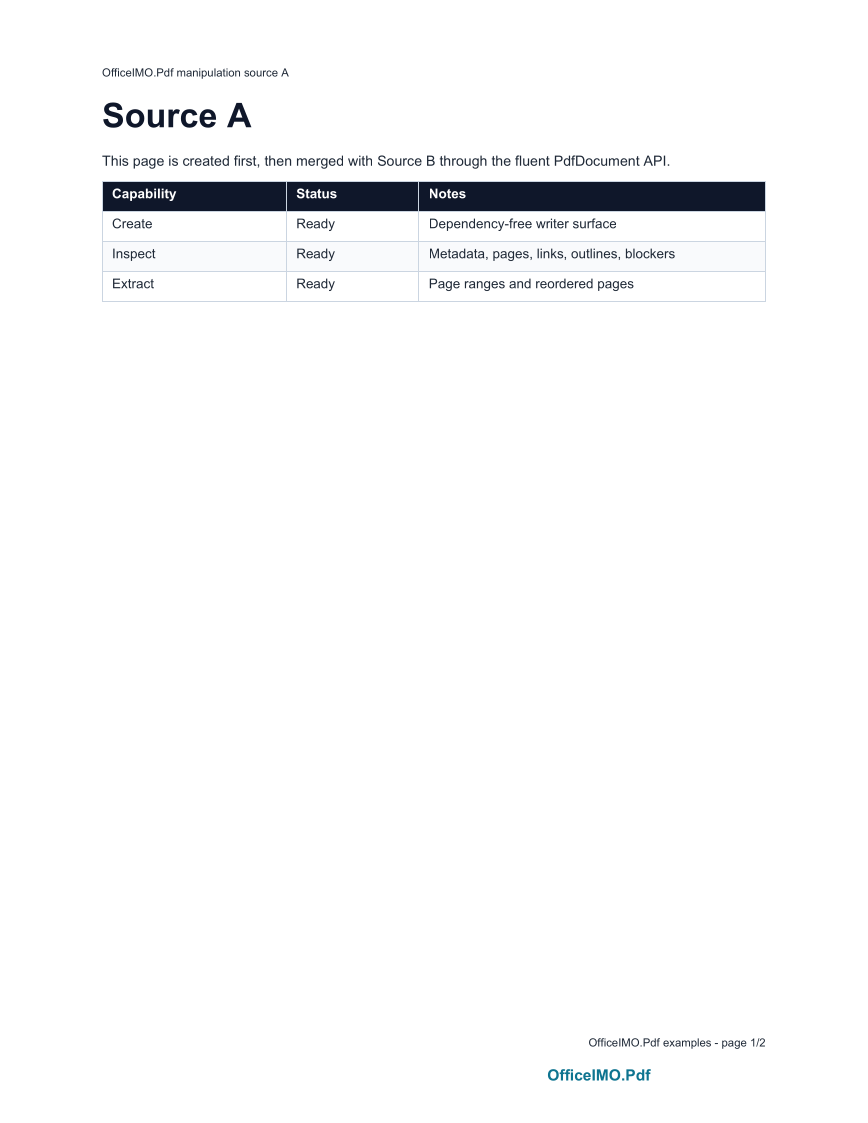
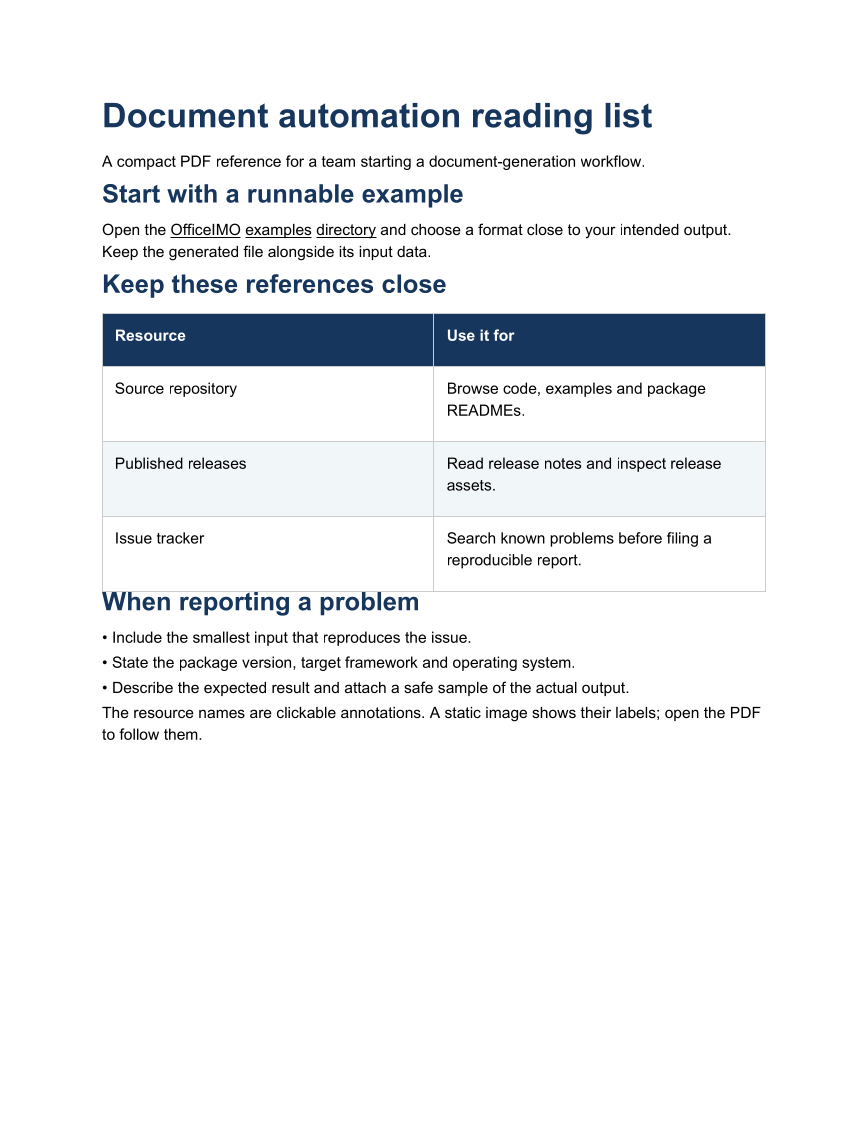
Build a dependency-free PDF report with branded sections, summary metrics, tables, drawing primitives, and page-aware layout.
The PDF is generated by OfficeIMO.Examples. The page image is its committed Poppler visual baseline, used to catch rendering regressions.
Standard PDF fonts are portable but intentionally narrower than arbitrary installed-font typography and full browser layout.

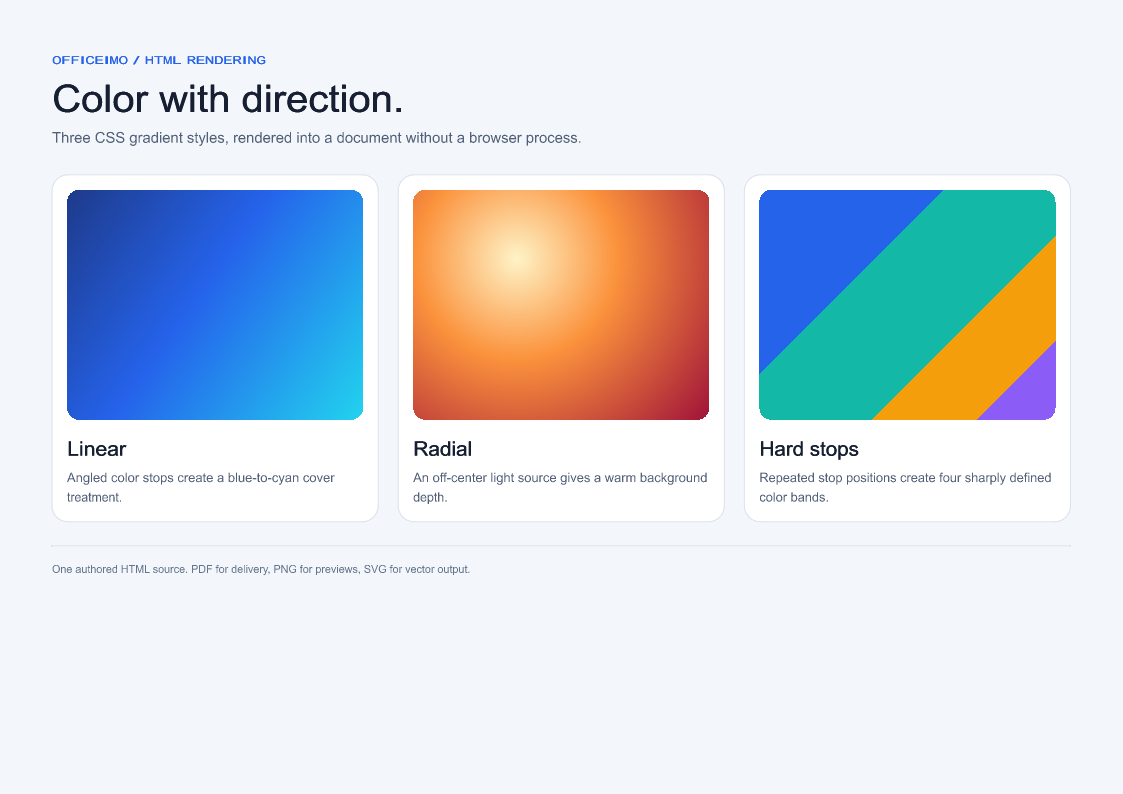
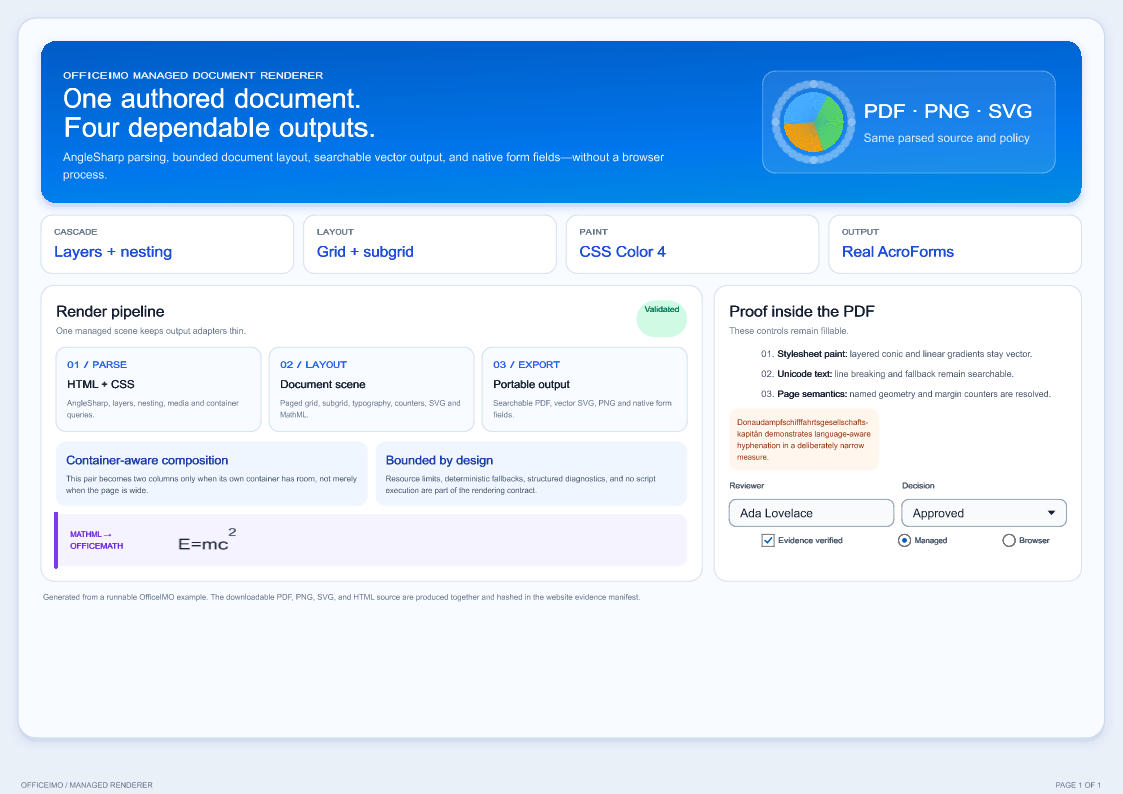
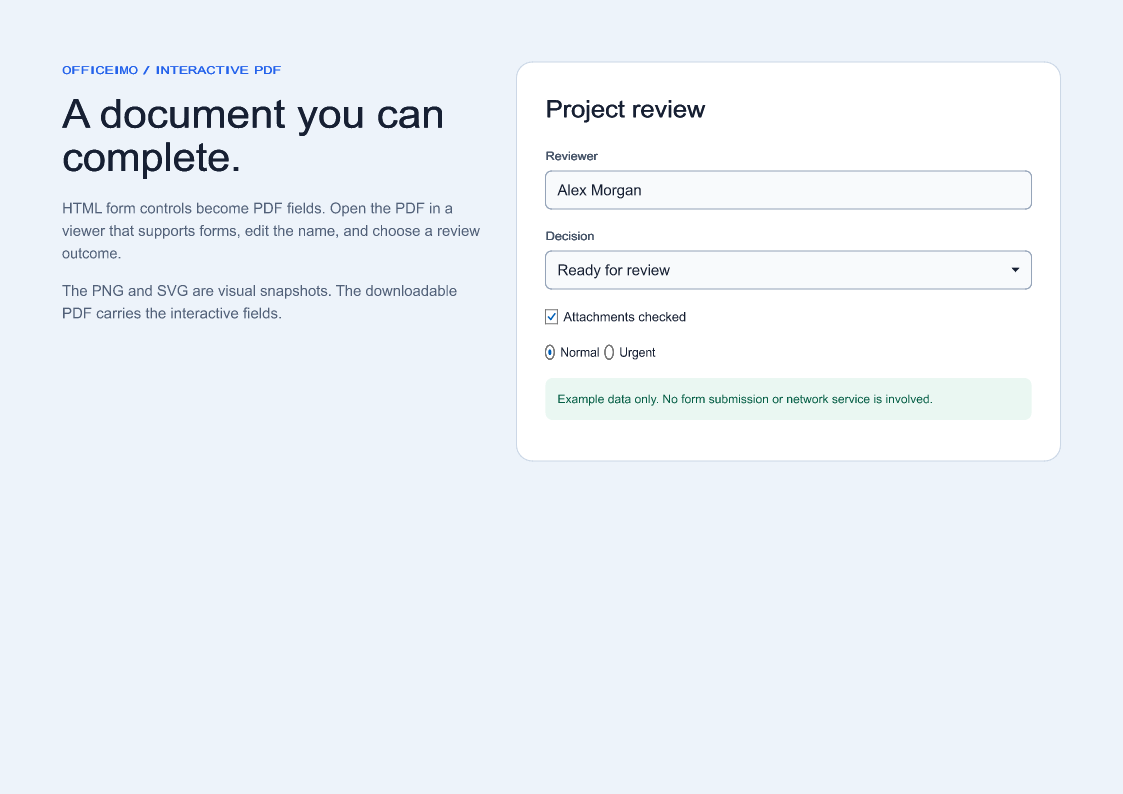
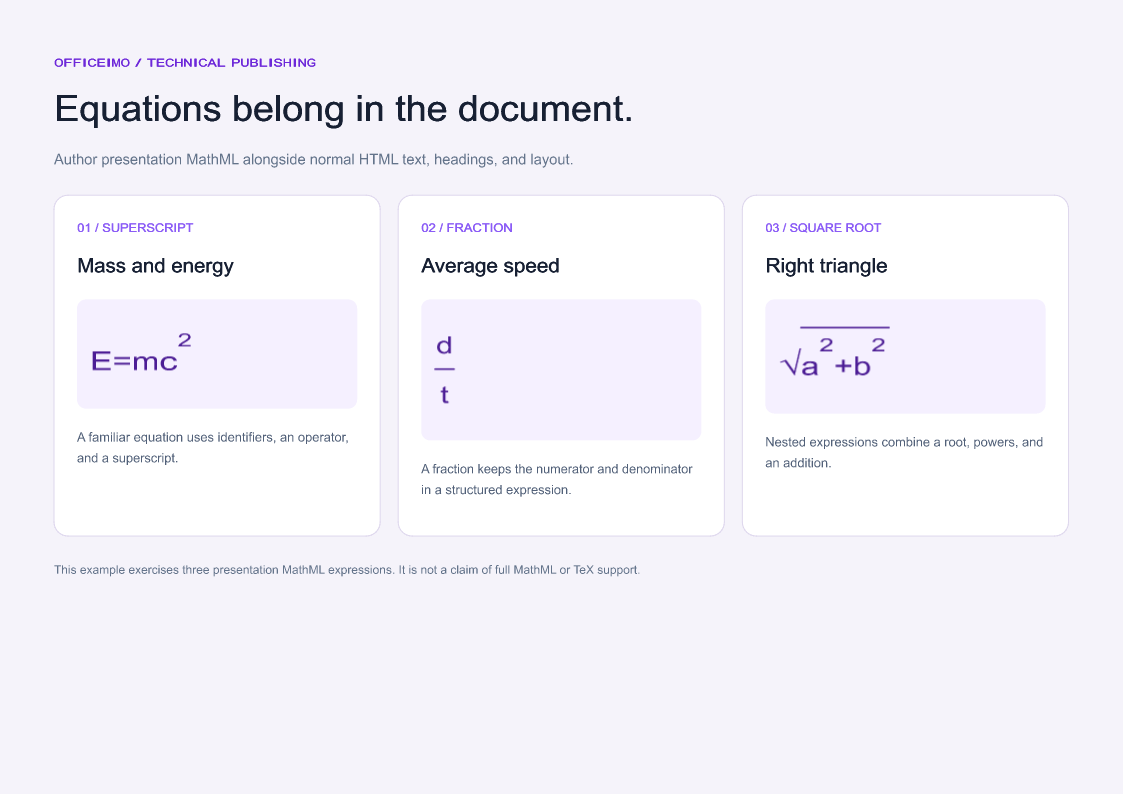
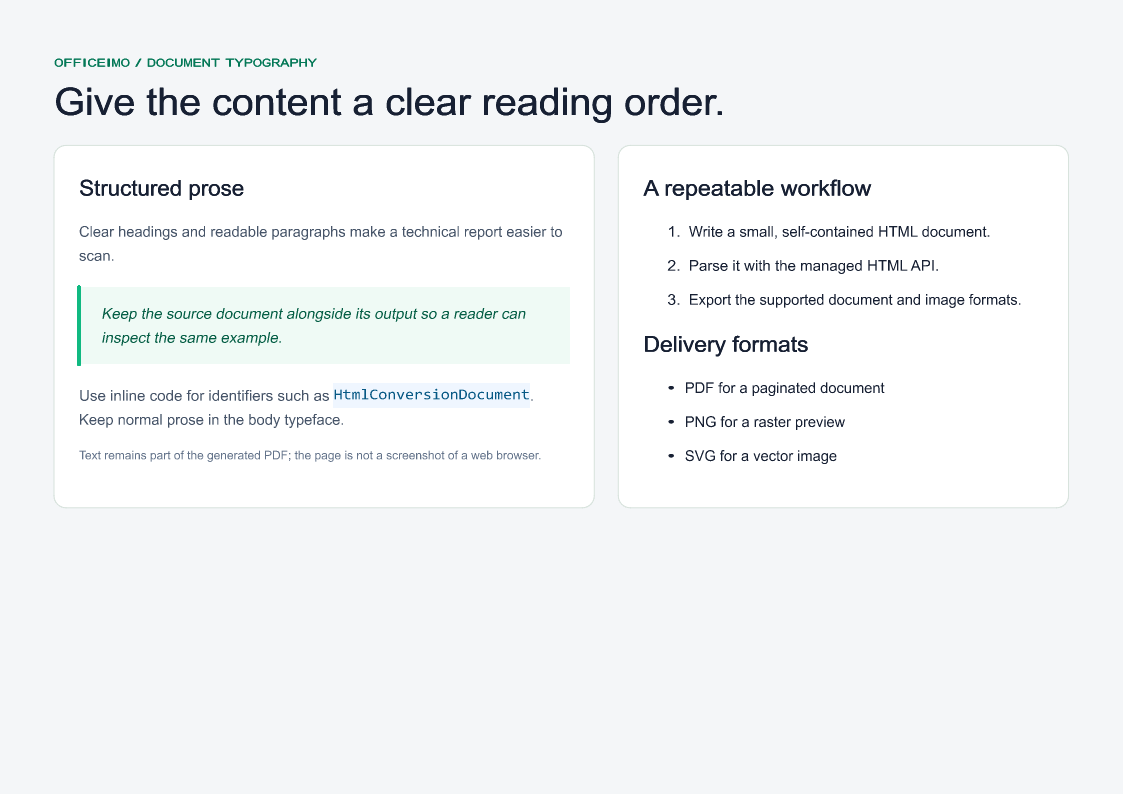
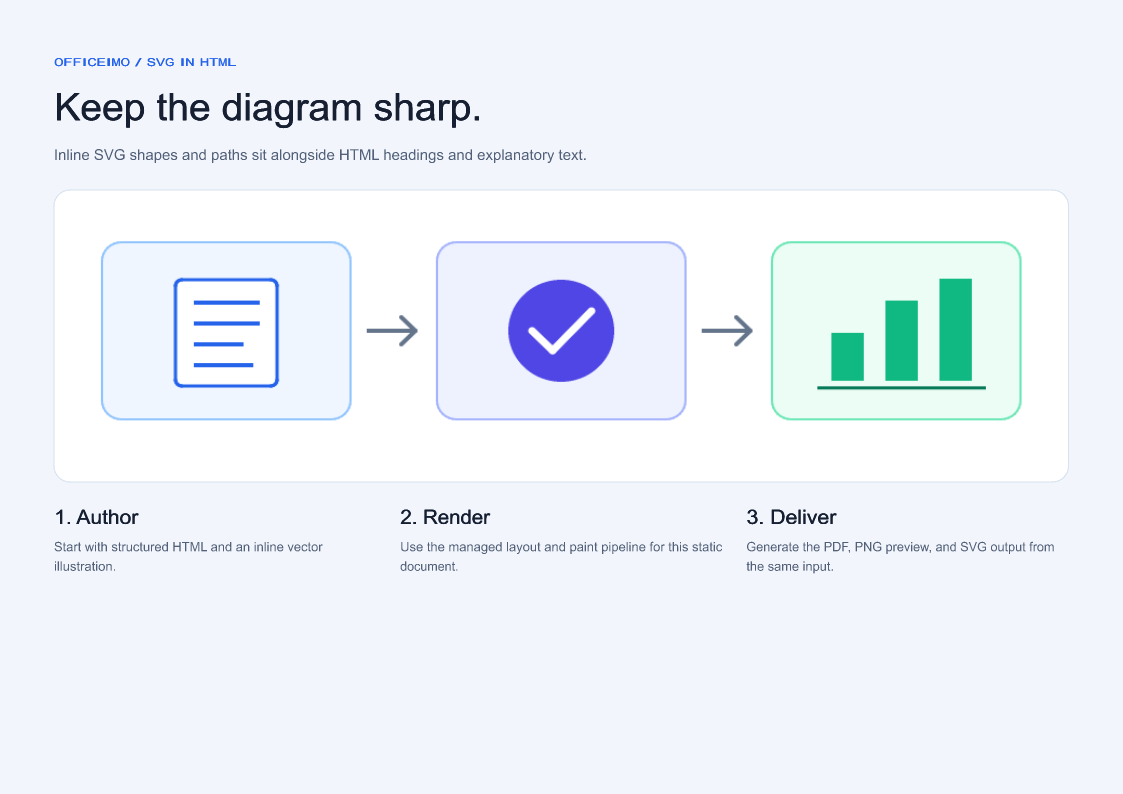
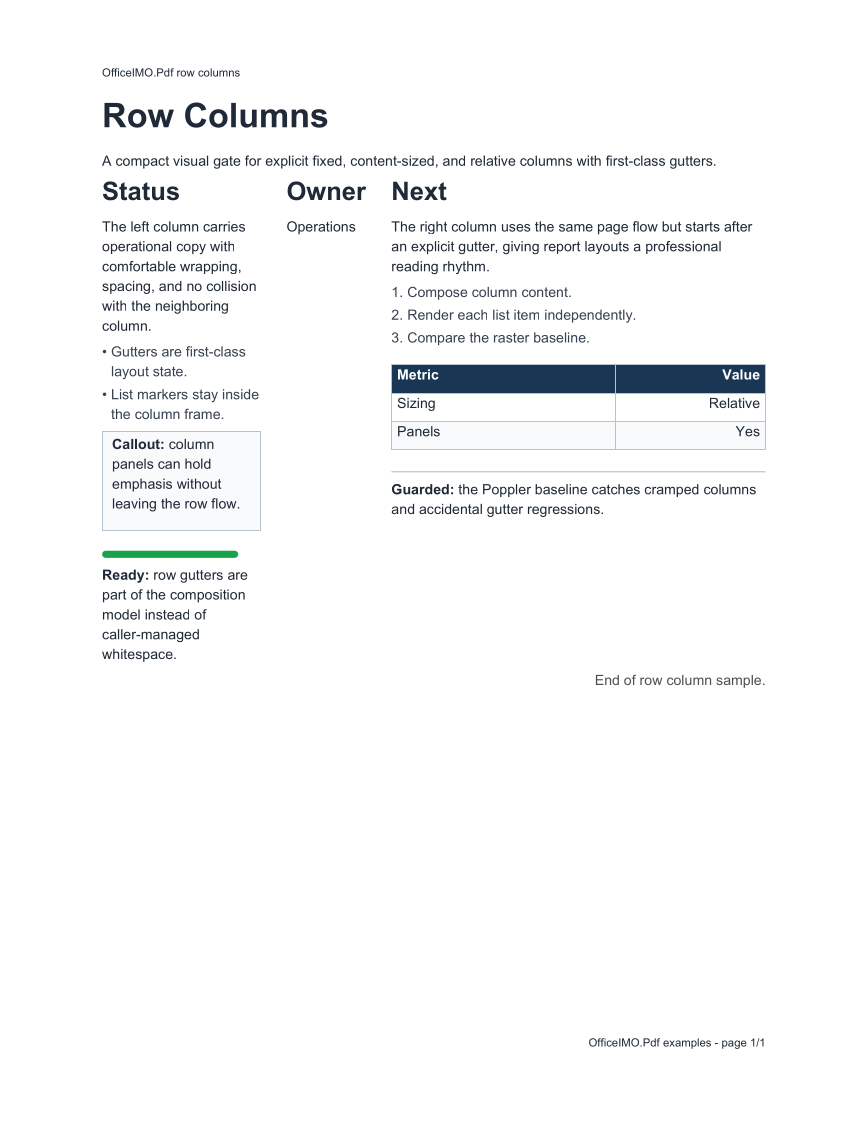
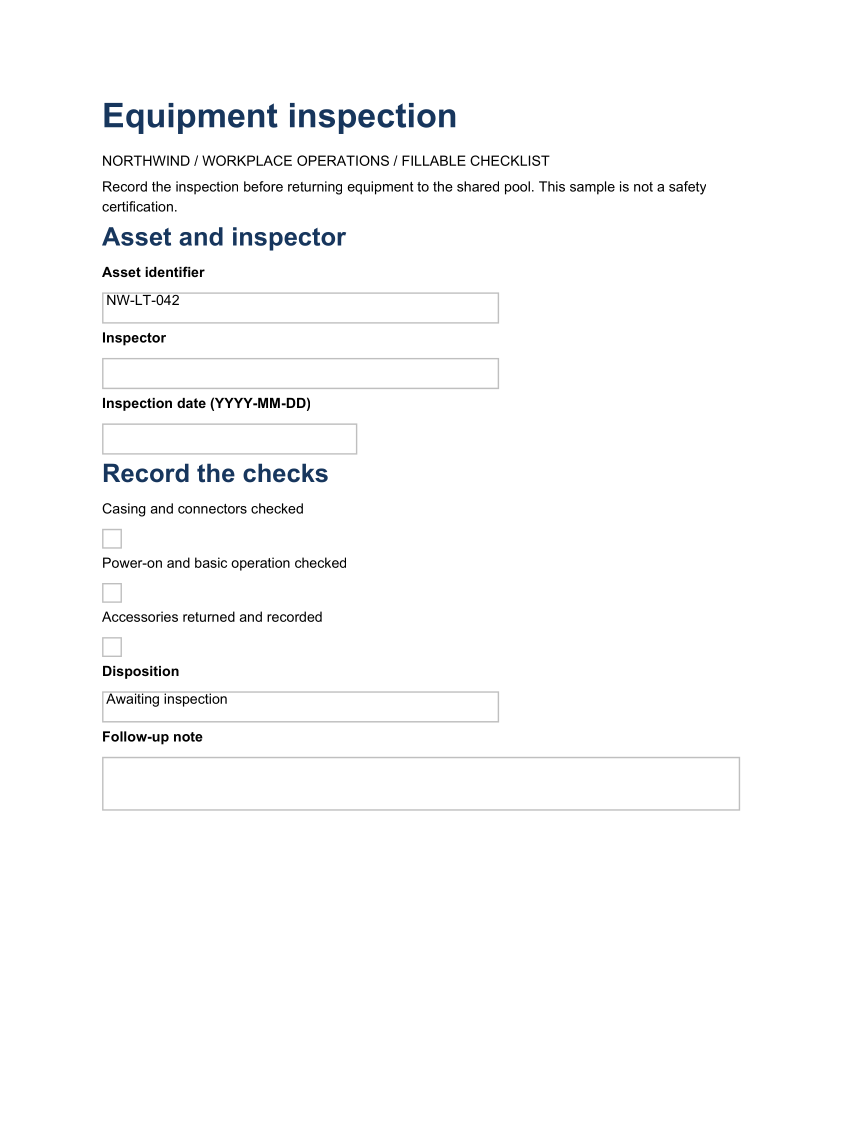
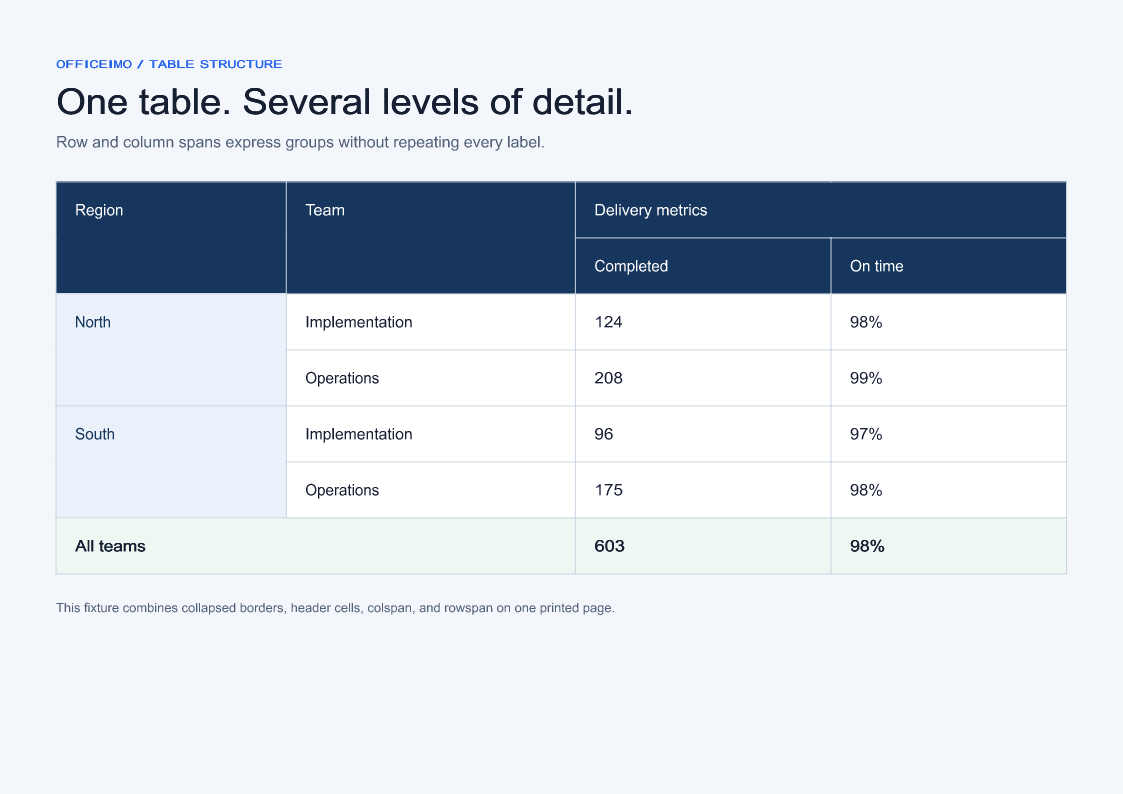
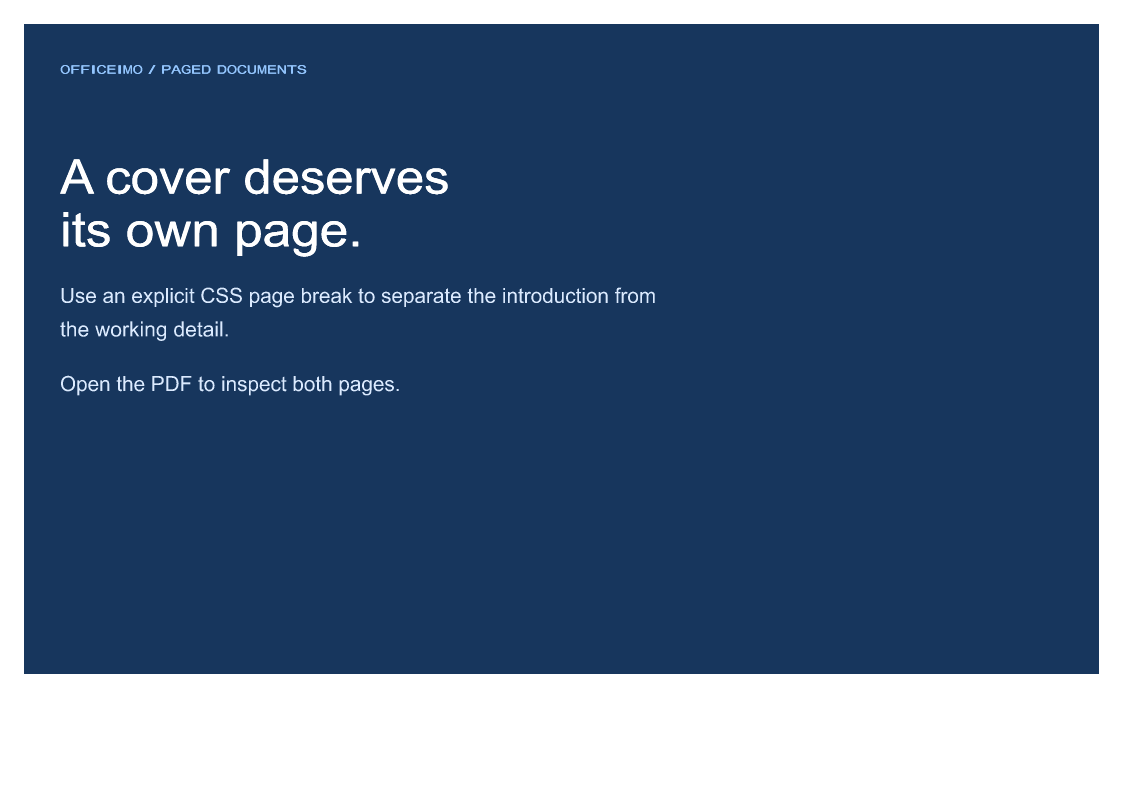
Render one stylesheet-authored document through a bounded managed pipeline with layered CSS, document layout, vector paint, MathML, and native PDF fields.
The HTML, PDF, PNG, and SVG are emitted by one runnable example. The PDF retains searchable text, named page-margin content, vector gradients, MathML, and four AcroForm fields.
This is a deterministic document renderer, not a JavaScript or browser runtime. Advanced print-production features such as page floats, footnotes, cross-references, and crop or bleed marks remain outside this proof.

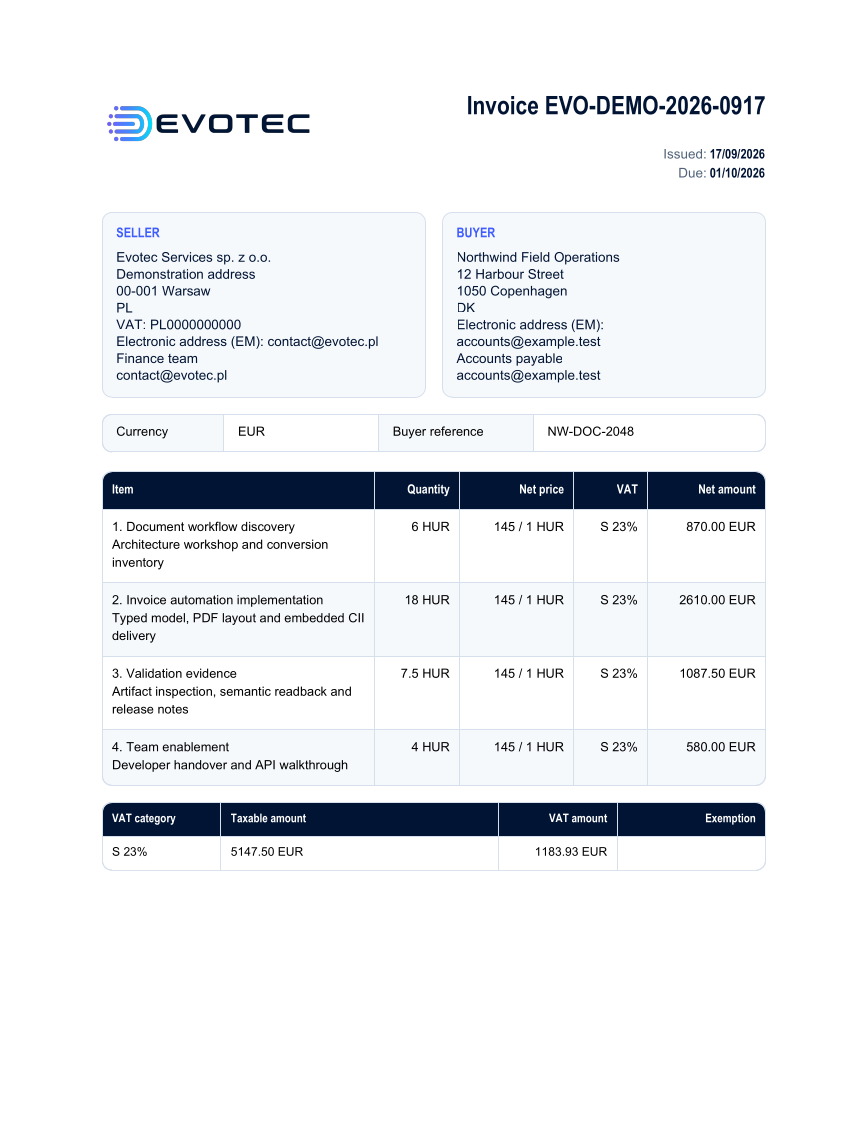
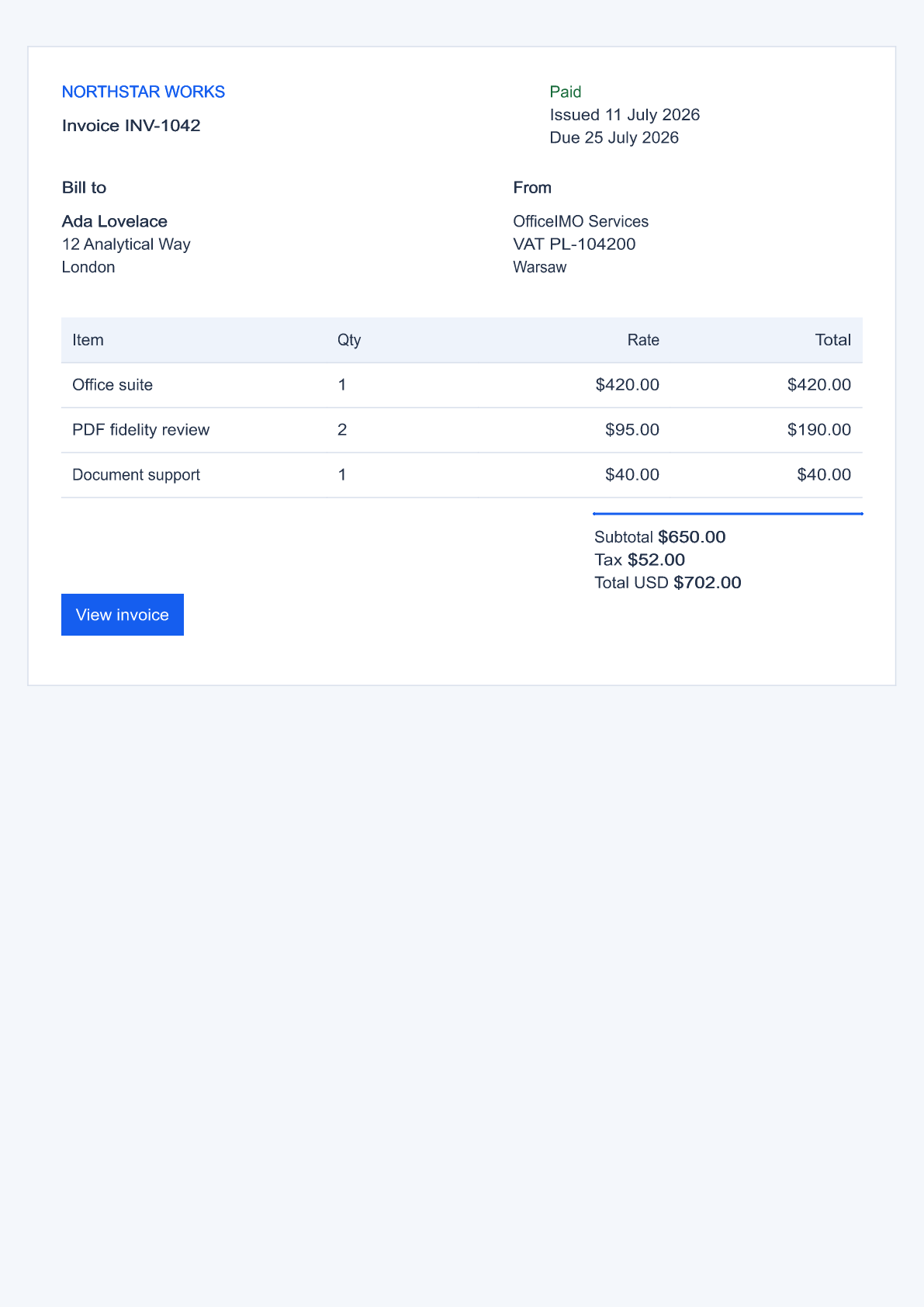
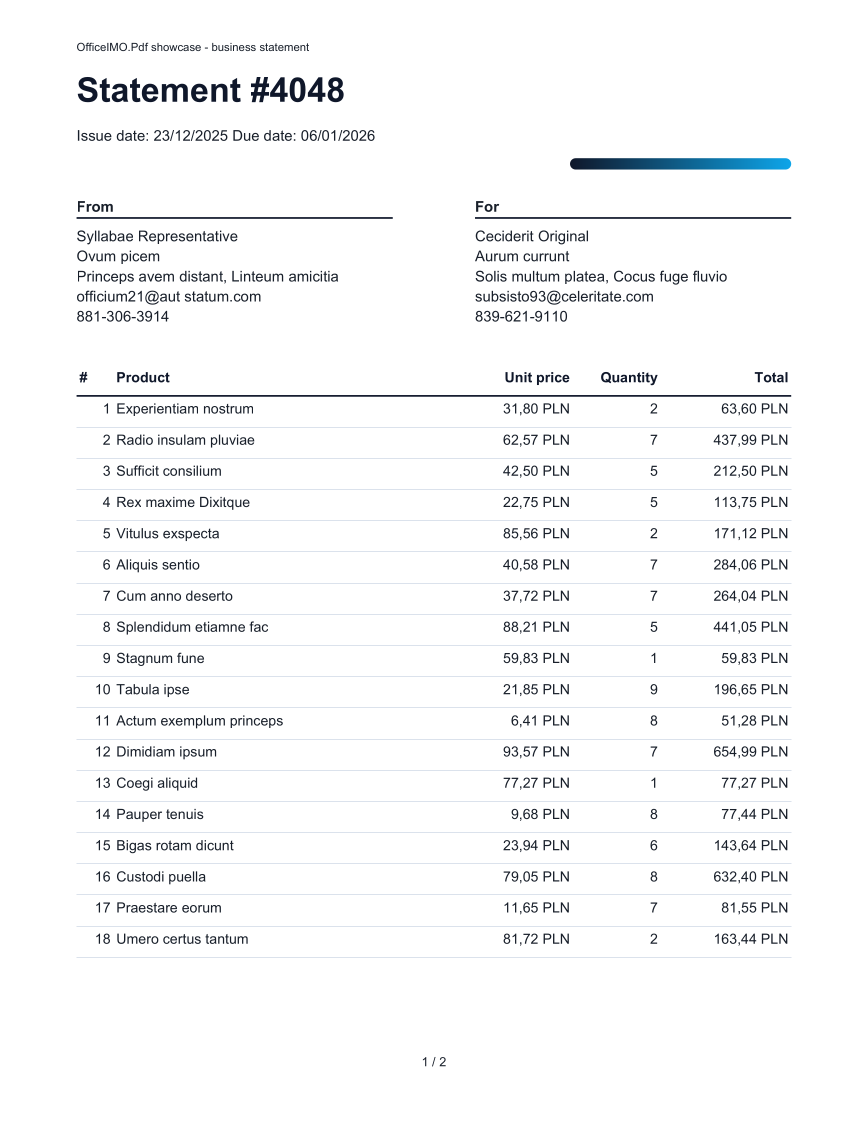
Bind encoded purchase rows outside the renderer, then produce a multi-page PDF with wrapped cells, repeated table headers, page counters, and a one-time totals block. PNG and SVG use the same parsed HTML and layout policy.
The downloadable searchable PDF spans multiple pages and is generated with the preview PNG from the same data-bound HTML document and options object by the linked runnable example.
PDF object and completed-page serialization are bounded and forward-only in this example. HTML parsing, cascade, and layout still use the complete static document; scripts are not executed.

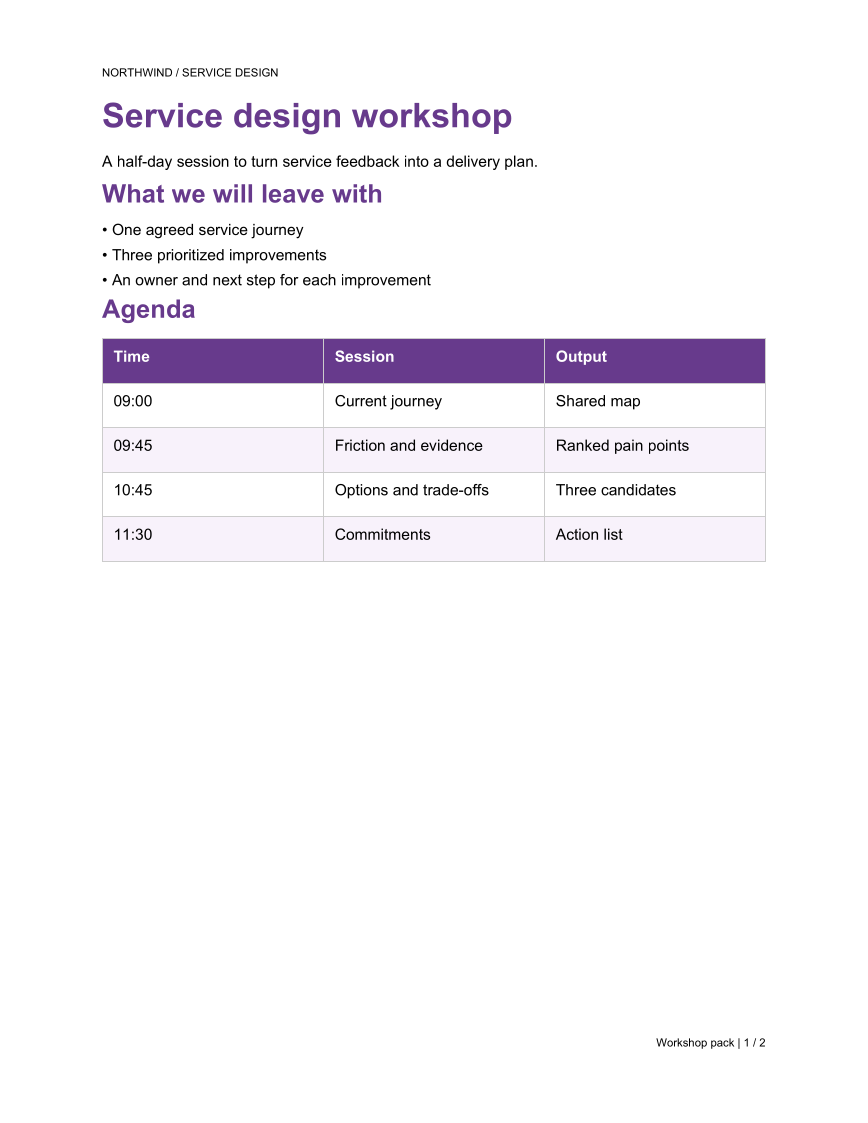
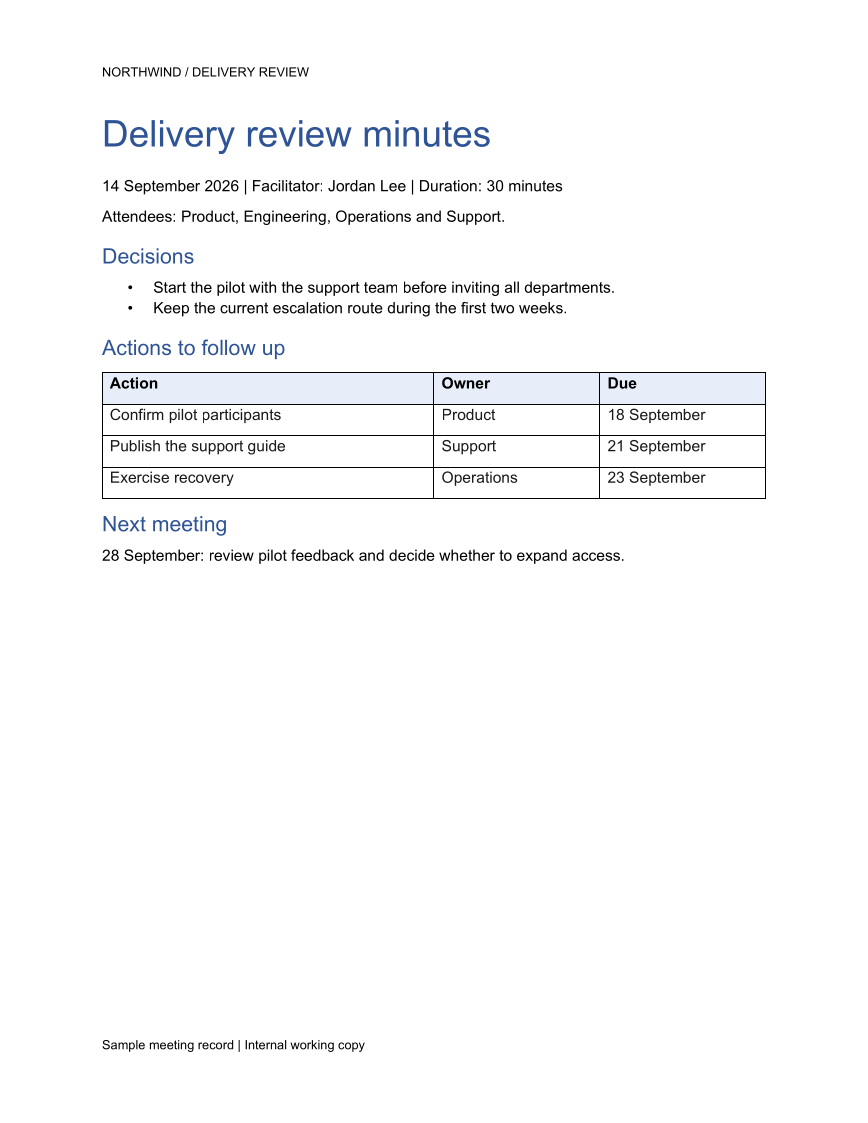
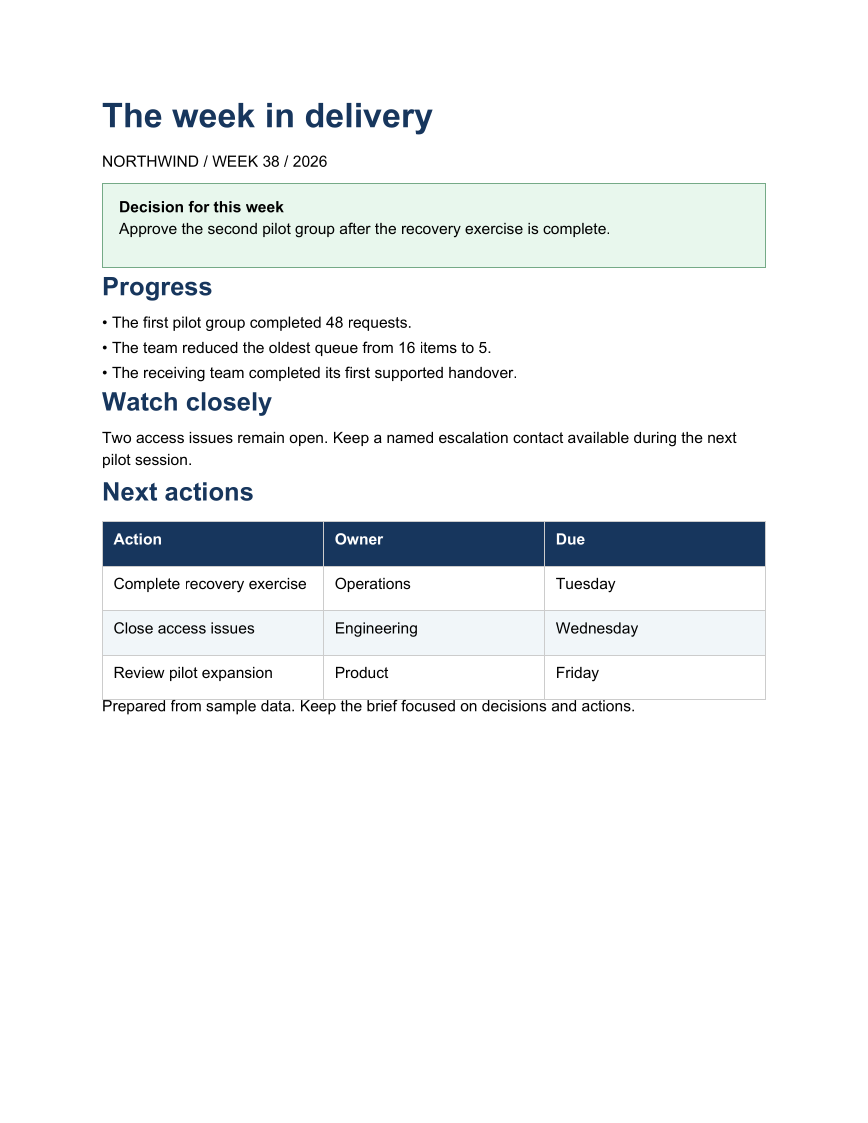
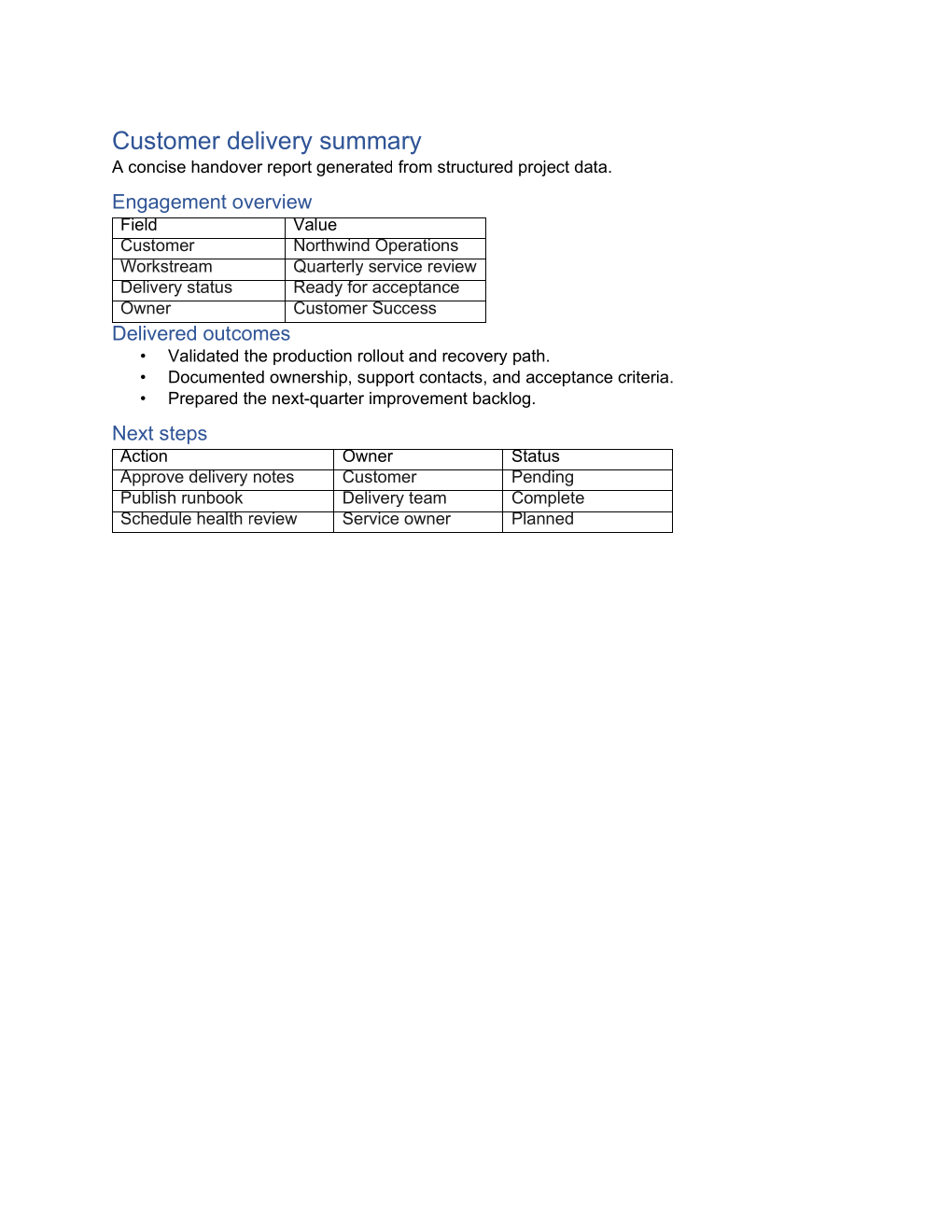
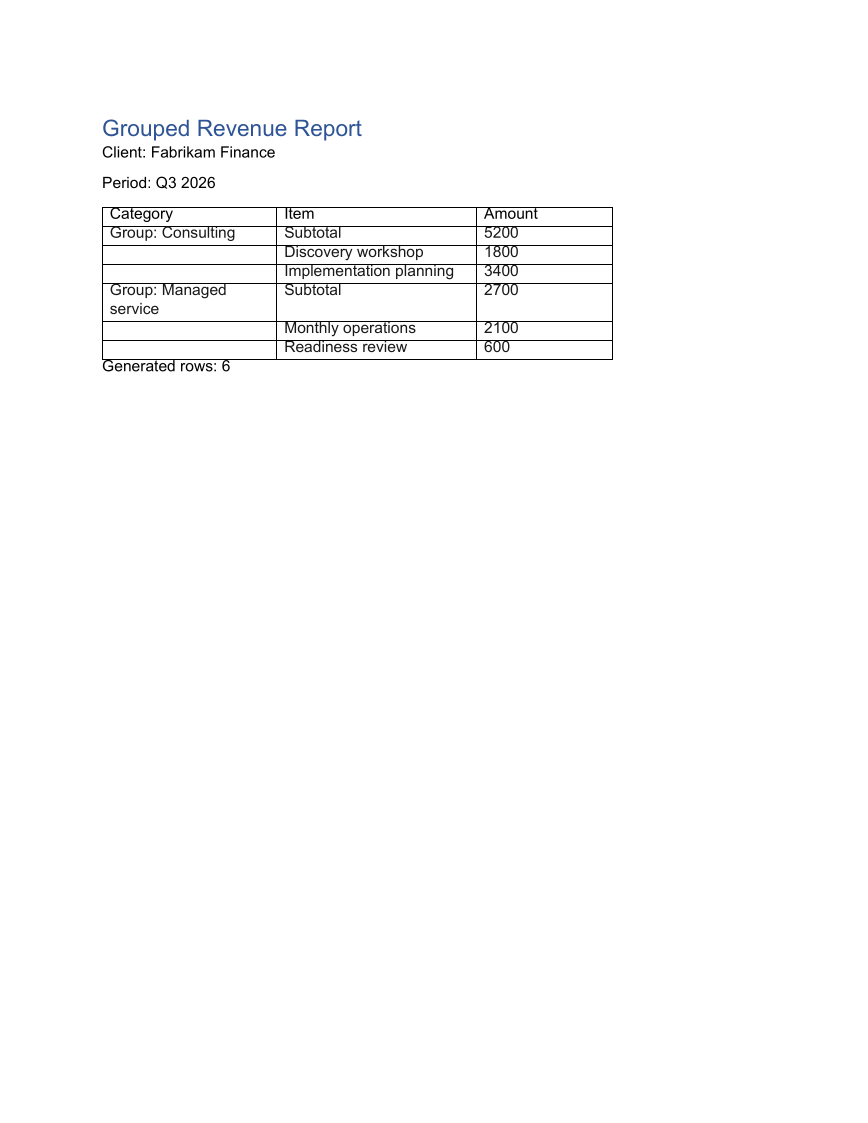
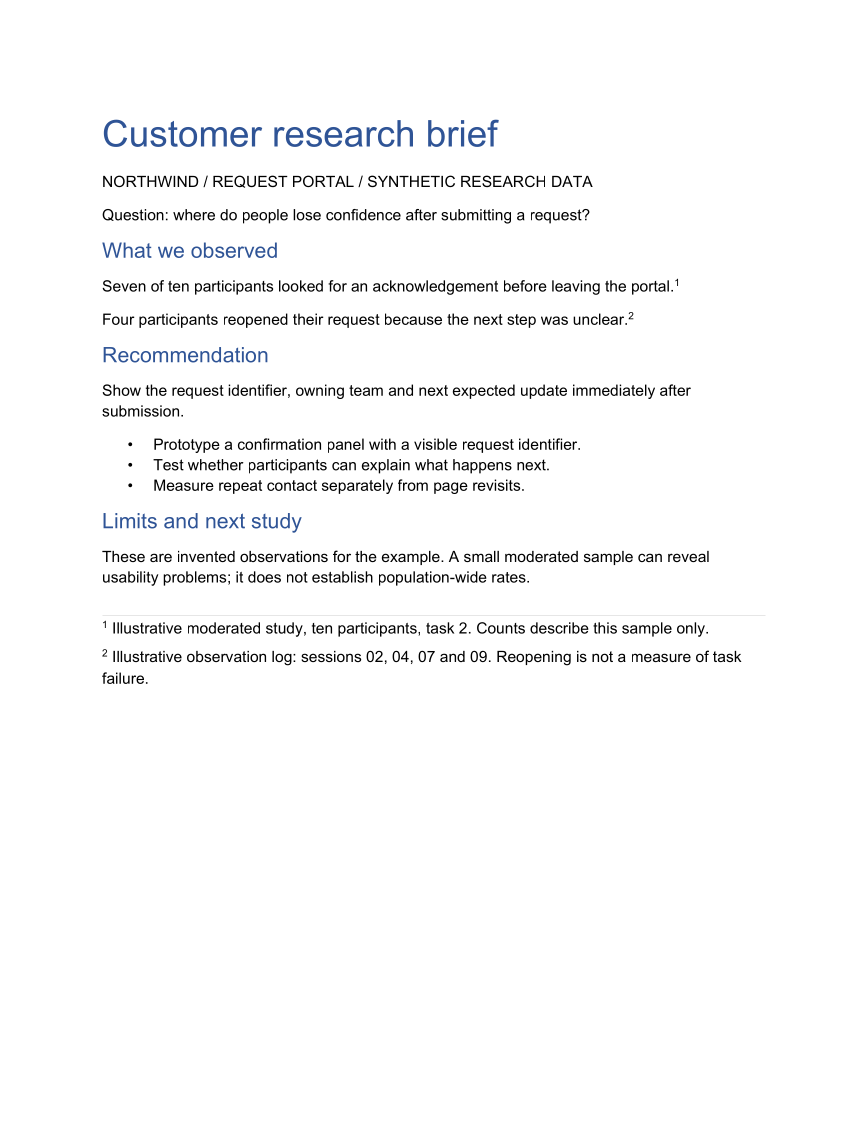
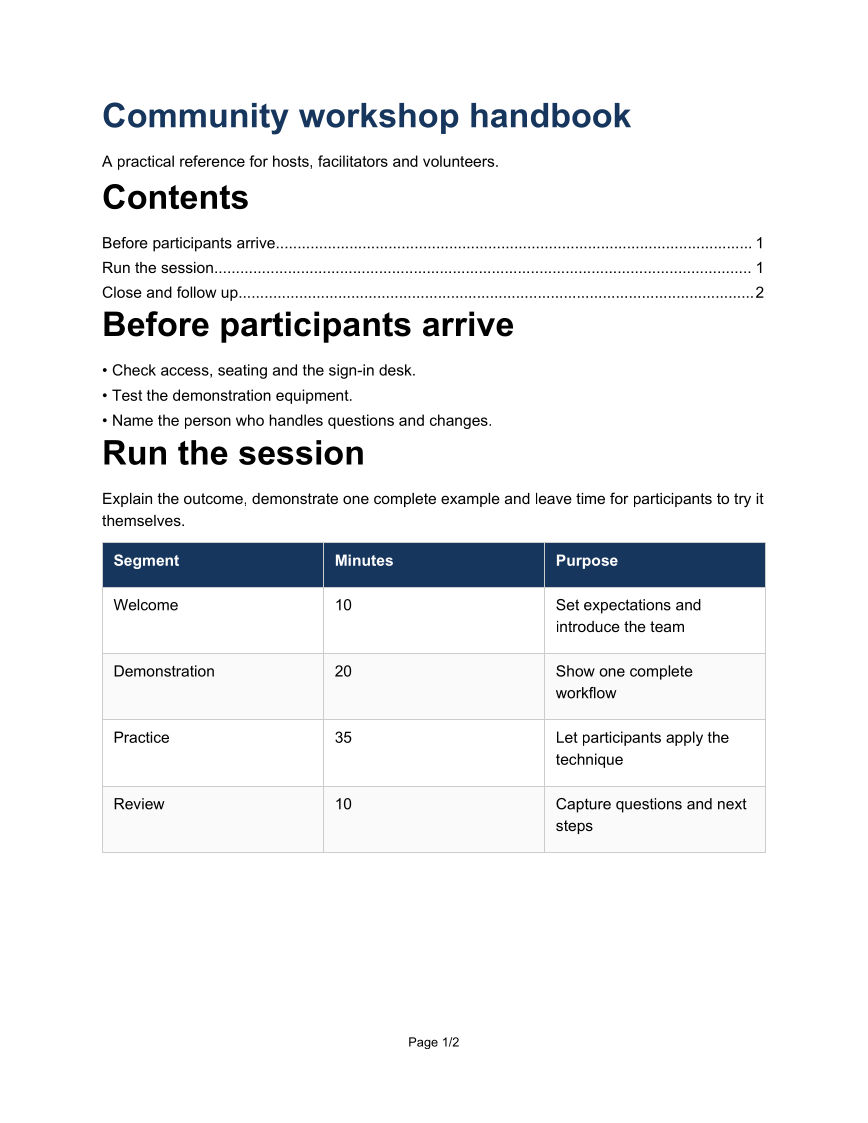
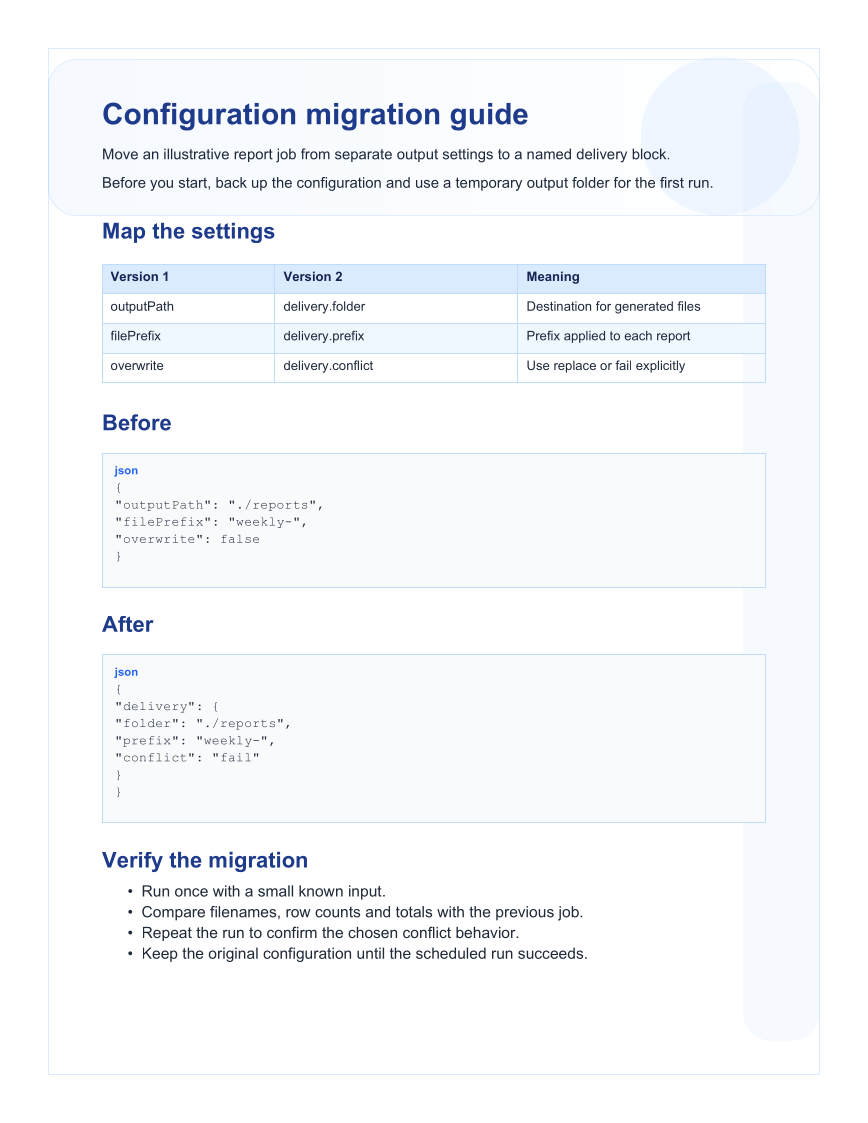
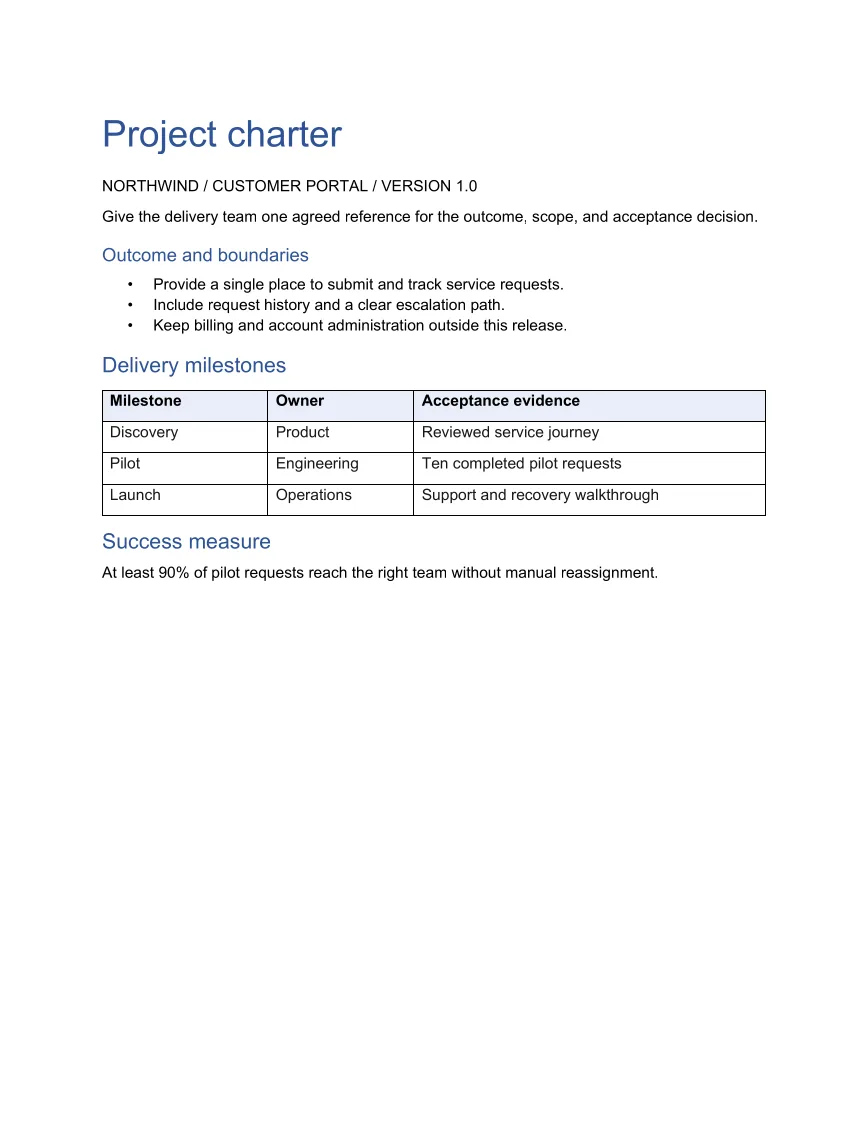
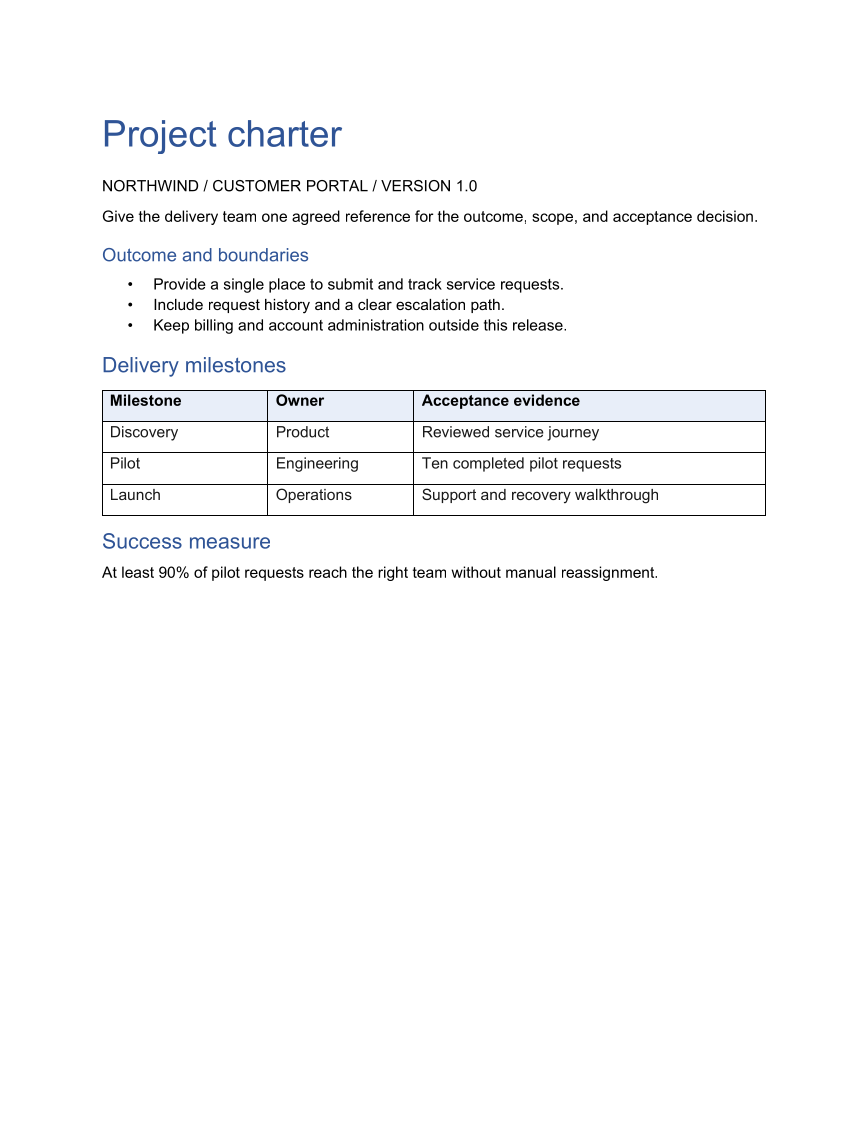
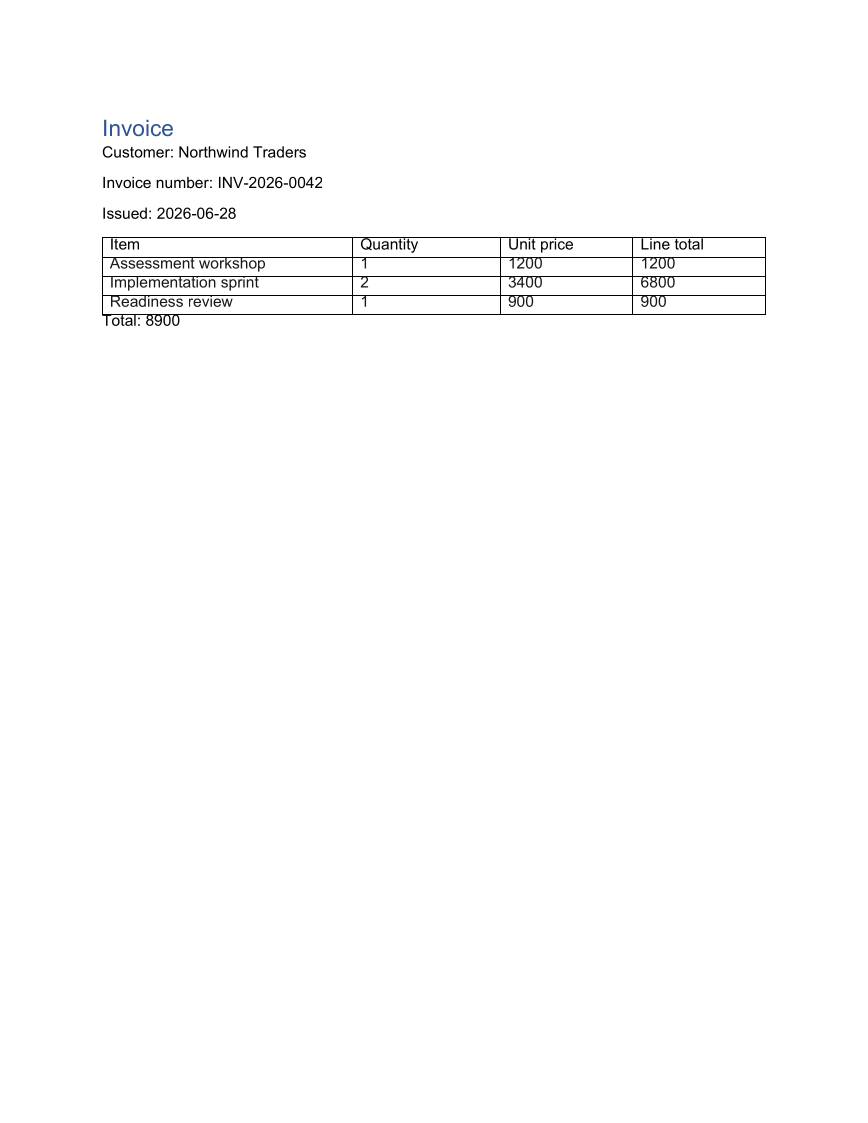
Create an editable delivery report with headings, lists, and operational tables, then convert the same Word model to a review-ready PDF.
The downloadable DOCX and PDF are generated from one runnable Word example. The preview is an independent Poppler render of the first-party PDF result.
The proof covers the generated document and its first PDF page. Exact pagination can still vary when callers opt into different installed fonts or introduce unsupported Word layout features.

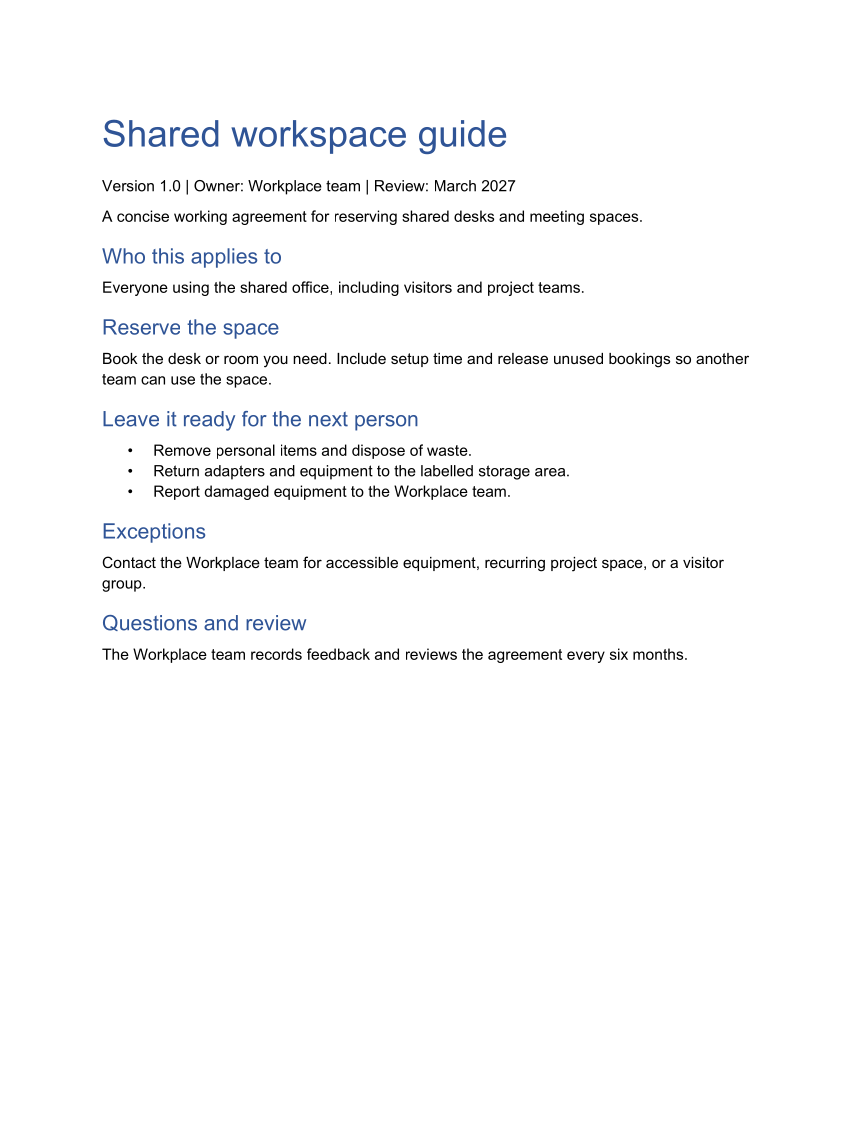
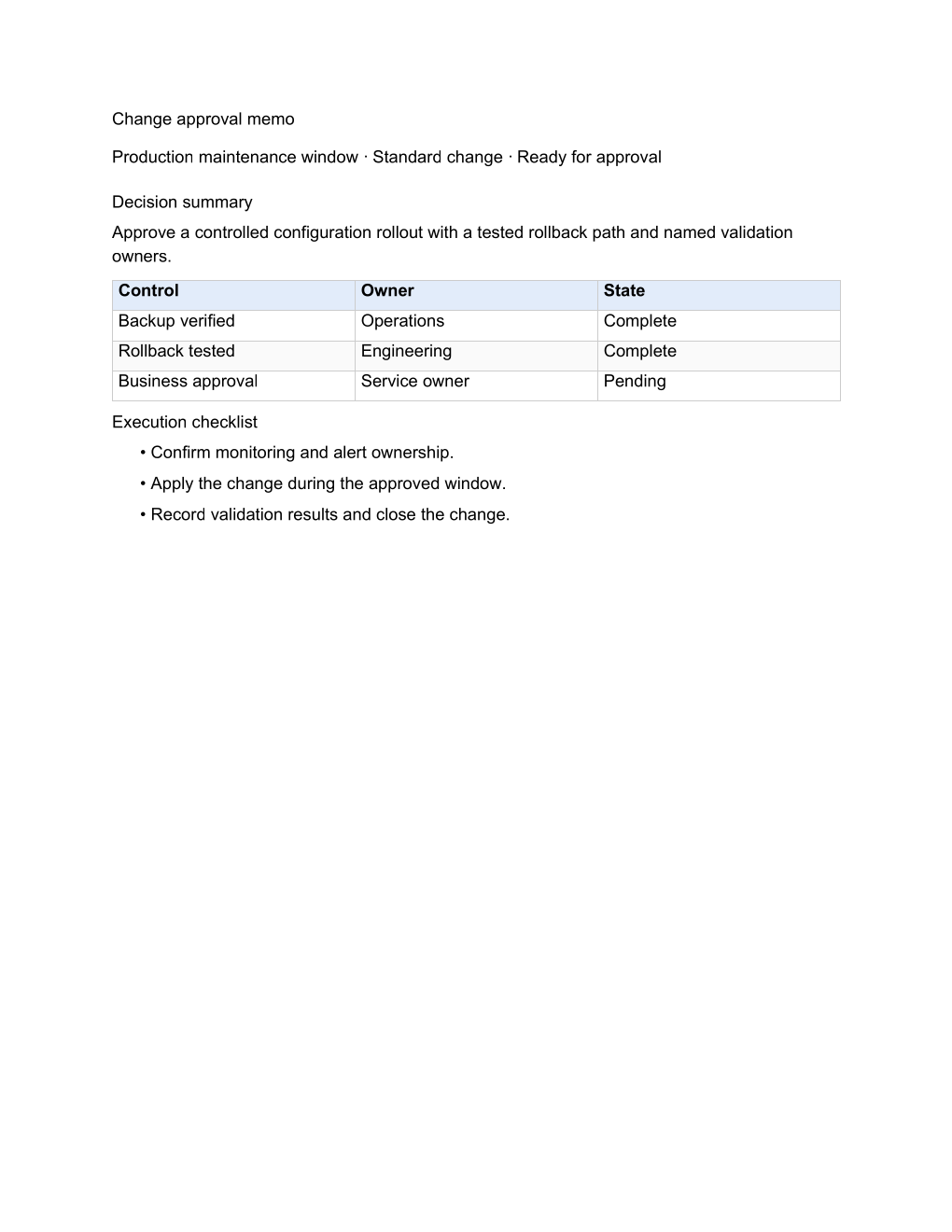
Build a portable approval memo with metadata, styled sections, a control table, and an execution checklist, then deliver it as RTF or PDF.
The downloadable RTF and PDF come from the same OfficeIMO.Rtf model. The preview independently renders the first-party conversion result.
The RTF model targets documented, portable structures. Desktop-specific RTF extensions, legacy drawing objects, and arbitrary embedded resources remain bounded conversion cases.

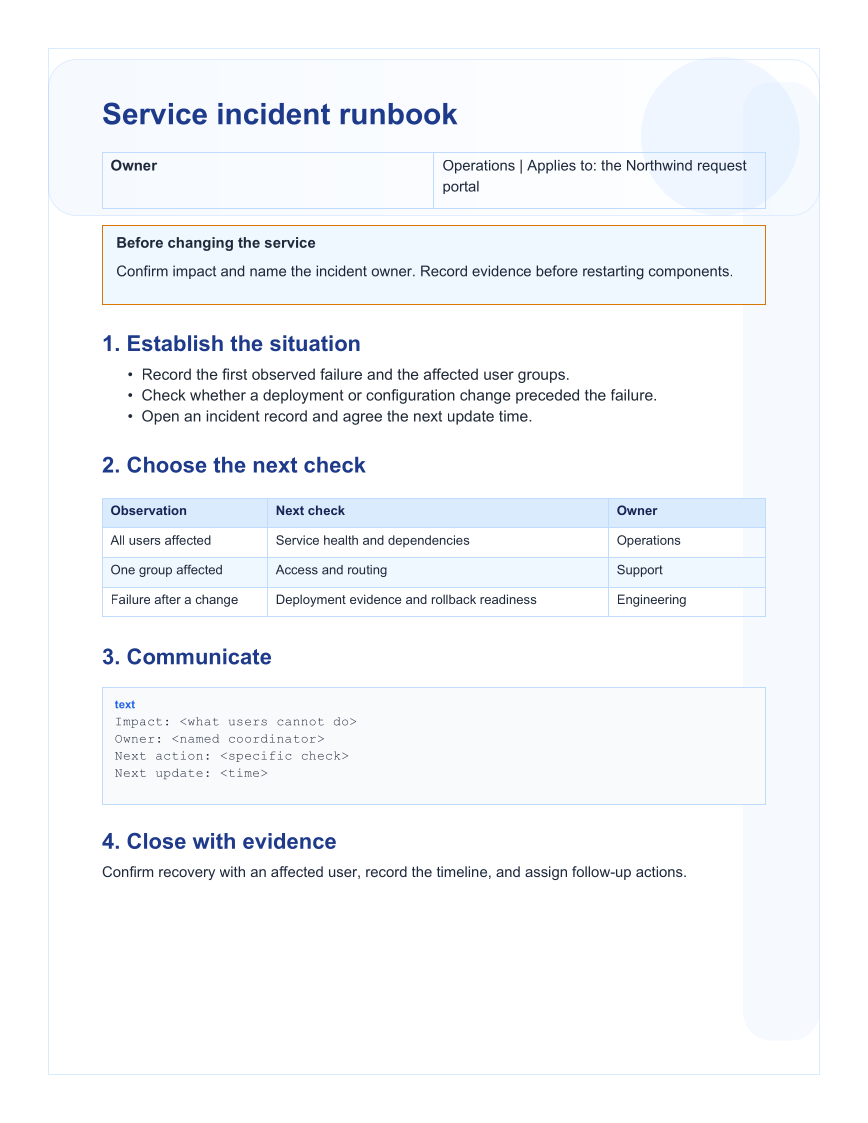
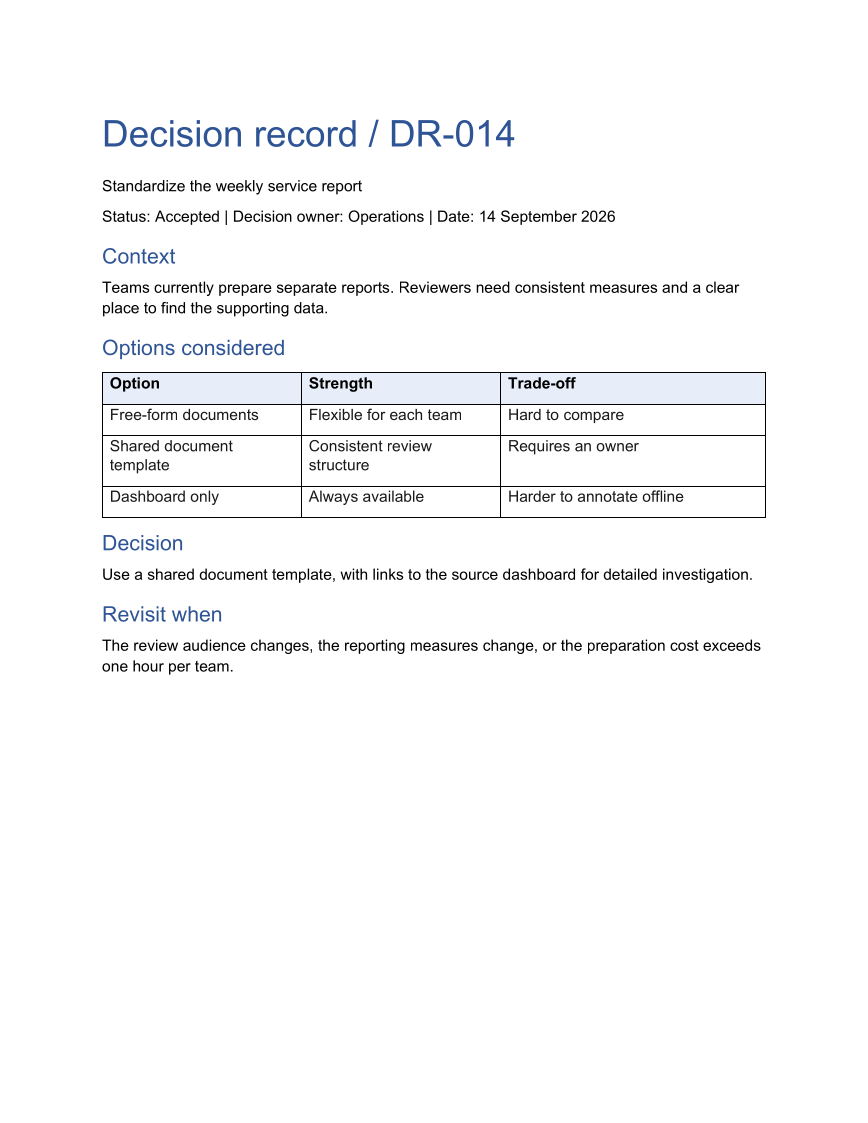
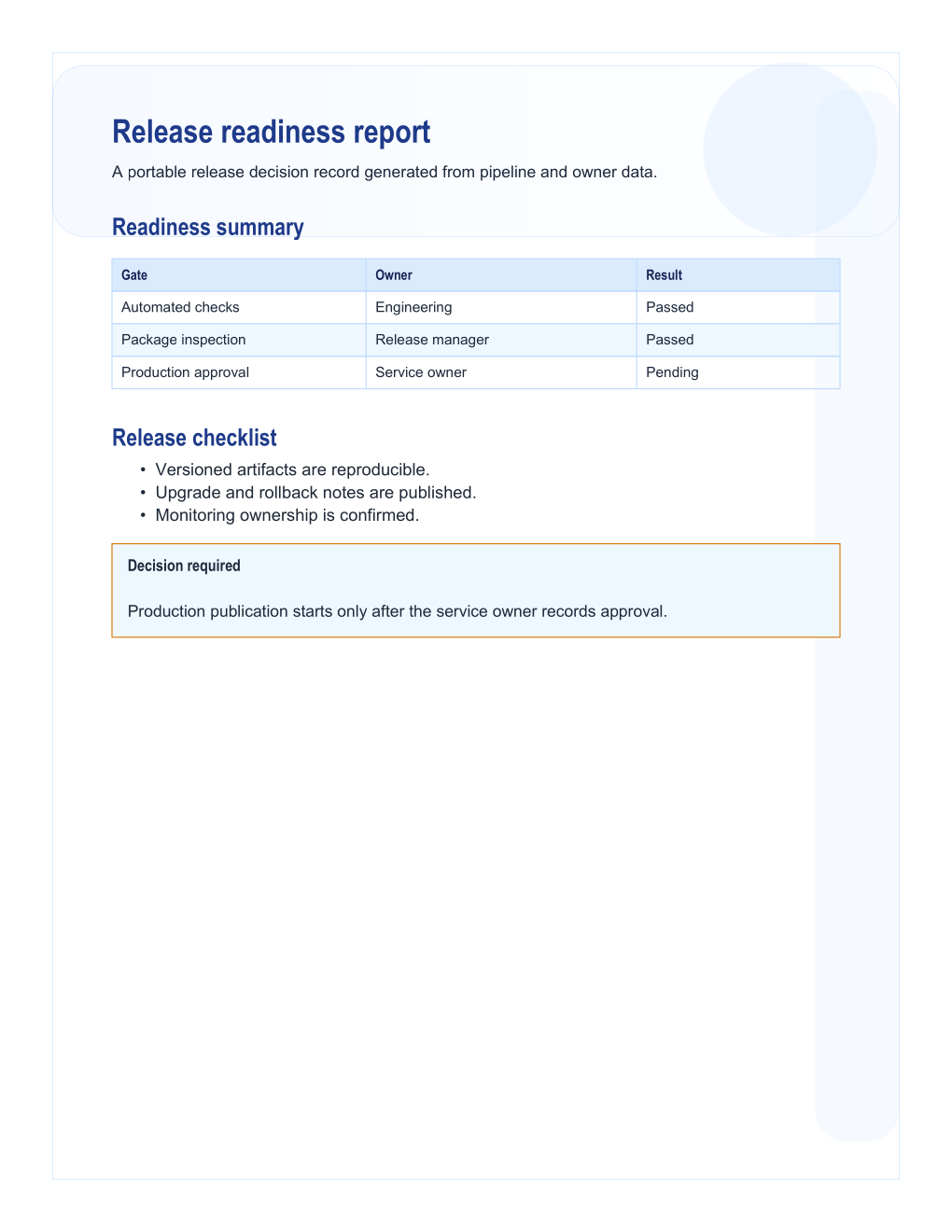
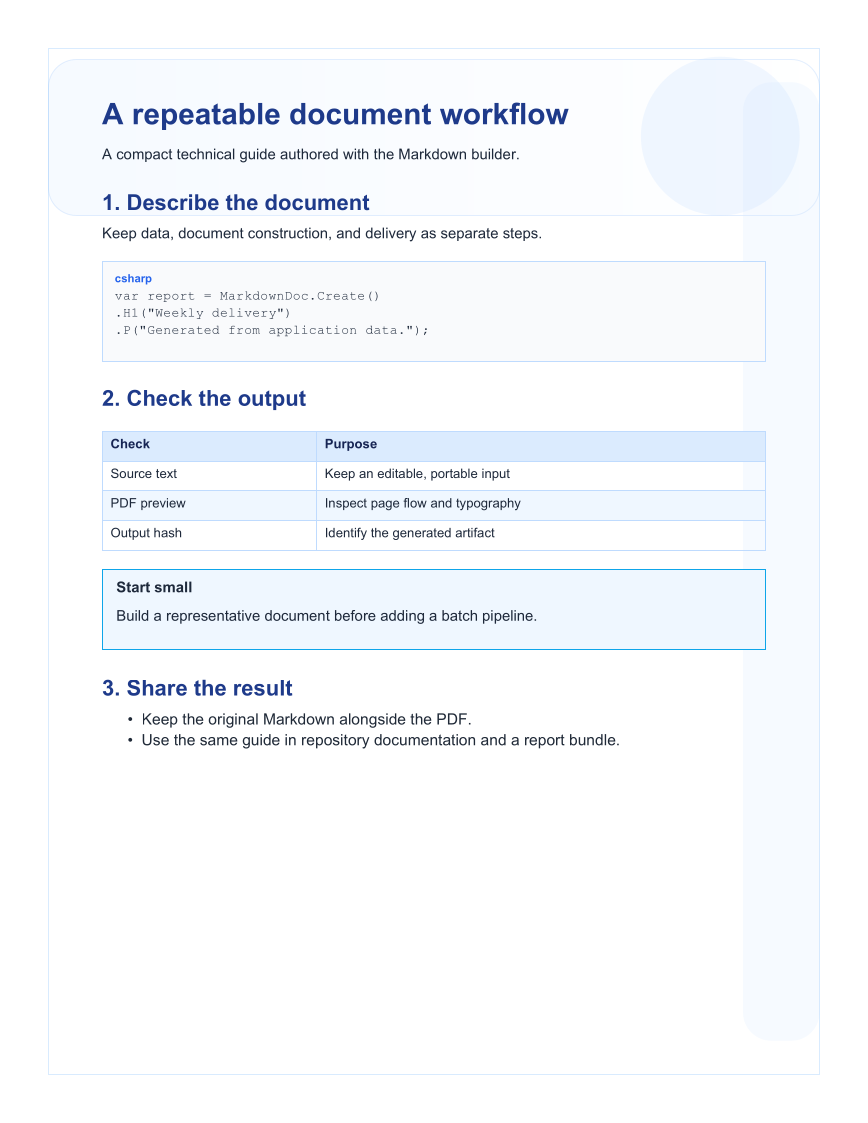
Turn a portable Markdown decision record into a themed PDF with metadata-aware headings, a readiness table, a checklist, and a decision callout.
The Markdown source and themed PDF are generated from one document model. The preview is an independent render of the first-party PDF.
The PDF path supports OfficeIMO's documented Markdown blocks and themes. Raw browser HTML, arbitrary scripts, and unsupported extensions require an explicit conversion policy.

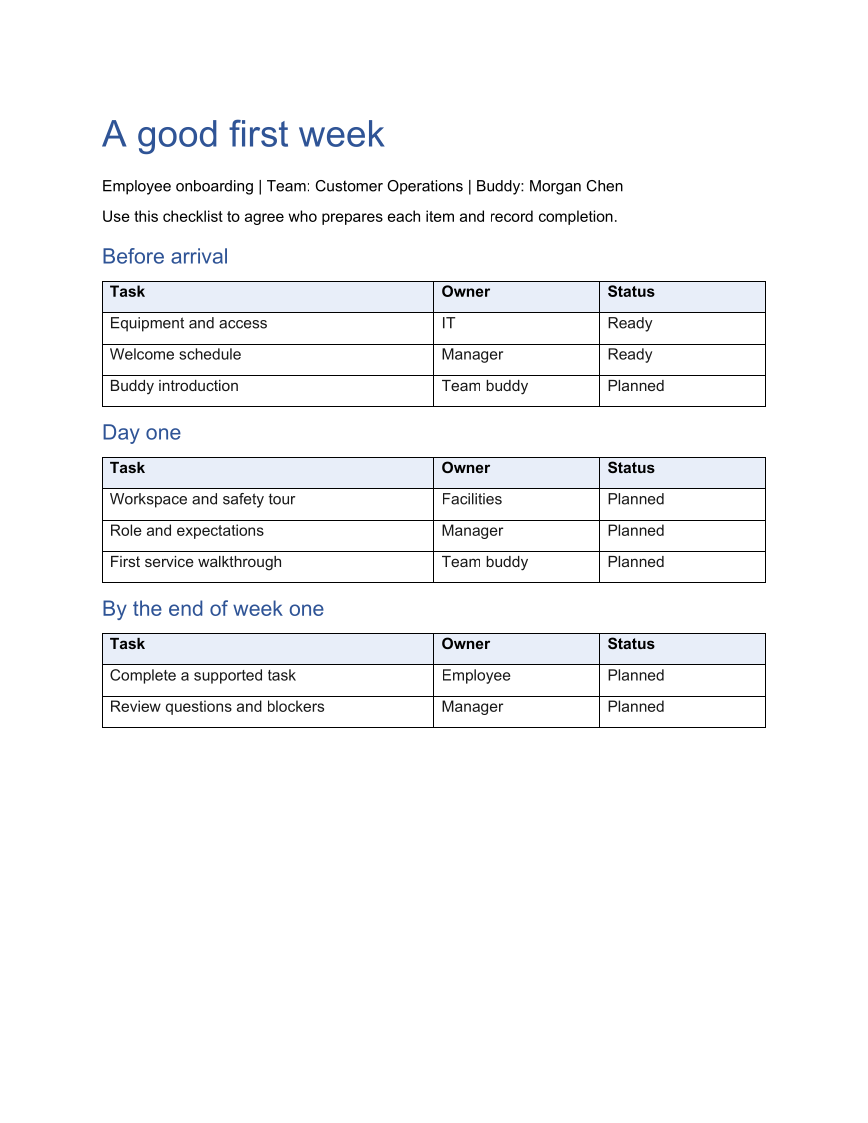
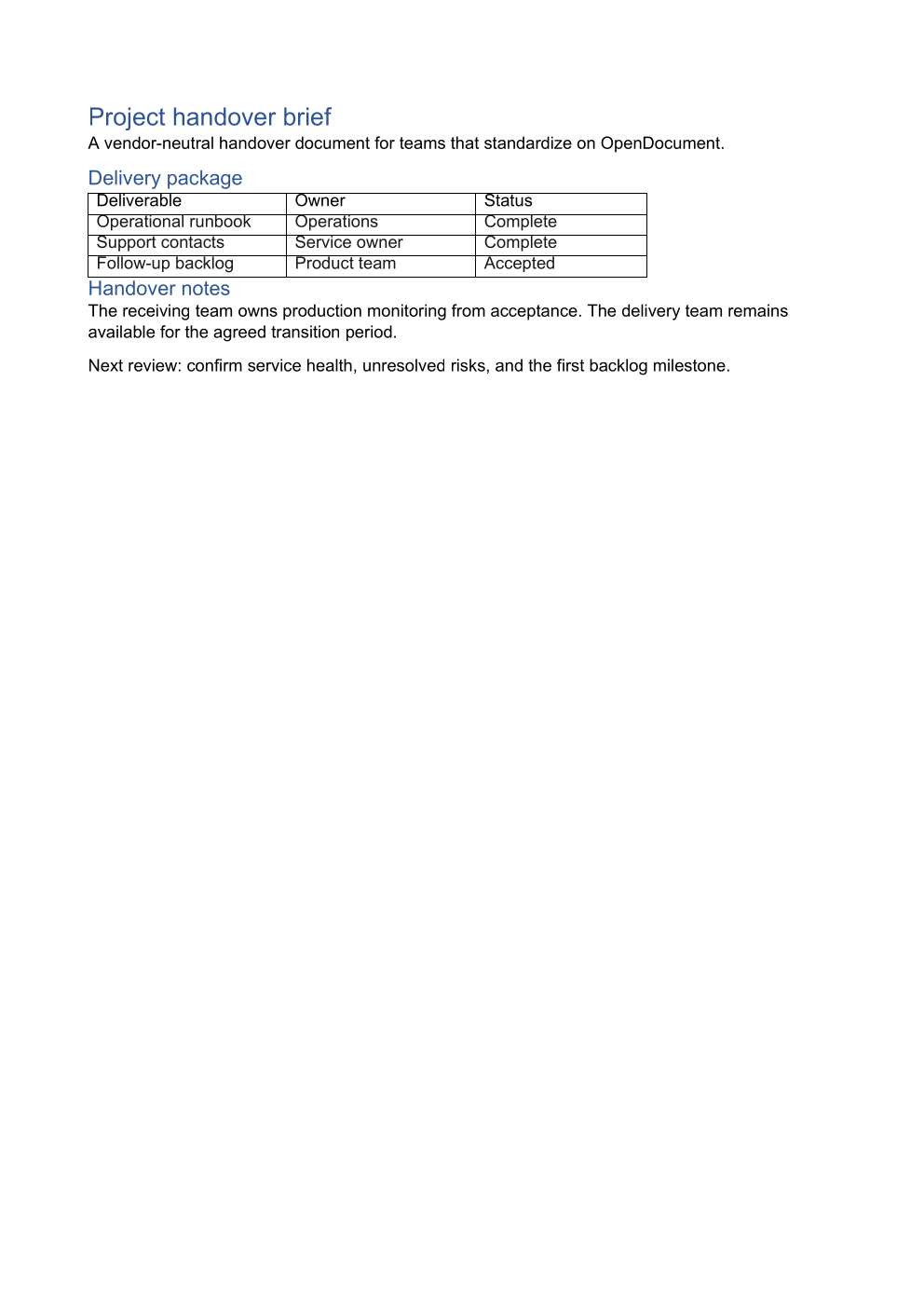
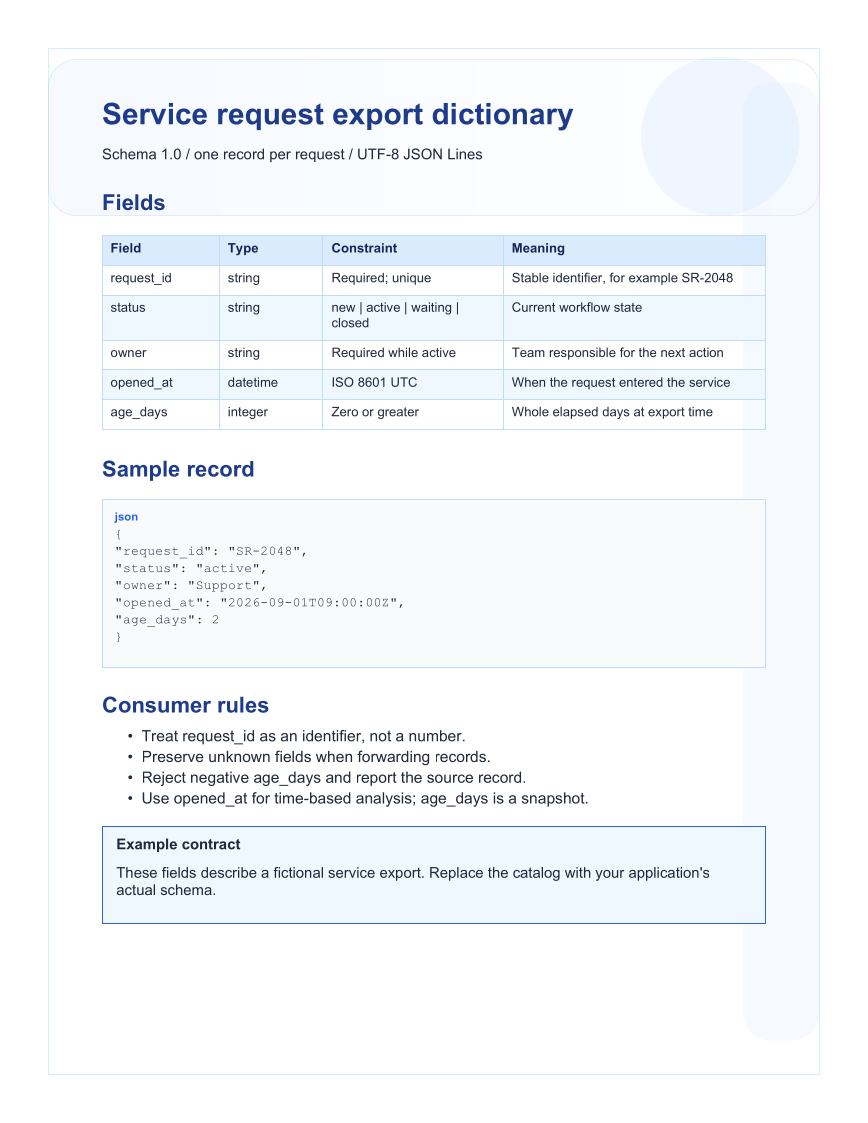
Generate a vendor-neutral ODT handover brief with structured headings, ownership, and status data, then convert it through the Word-compatible PDF pipeline.
The ODT and PDF are generated by the same runnable example. The preview independently renders the first page of the first-party OpenDocument conversion.
The converter maps the supported OpenDocument text model into the shared Word/PDF layout path. Advanced LibreOffice-only layout and macro behavior are outside this proof.
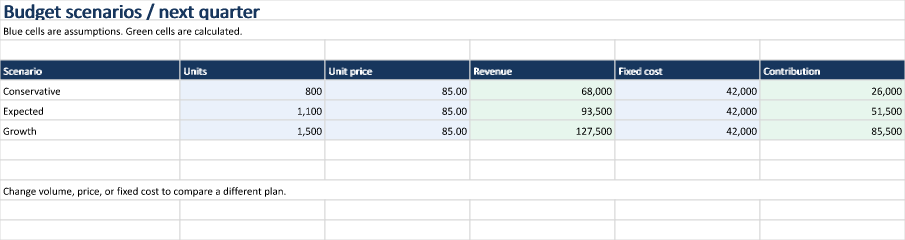
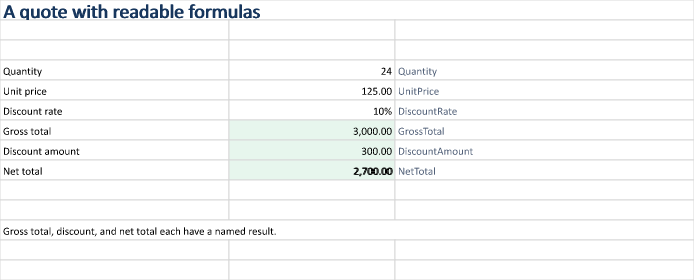
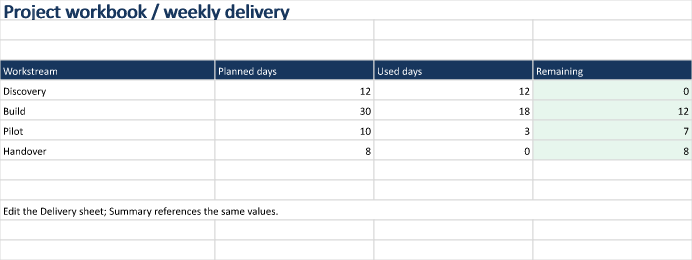
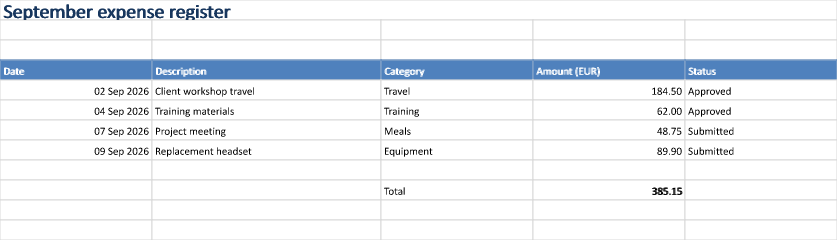
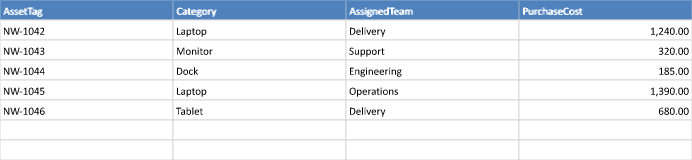
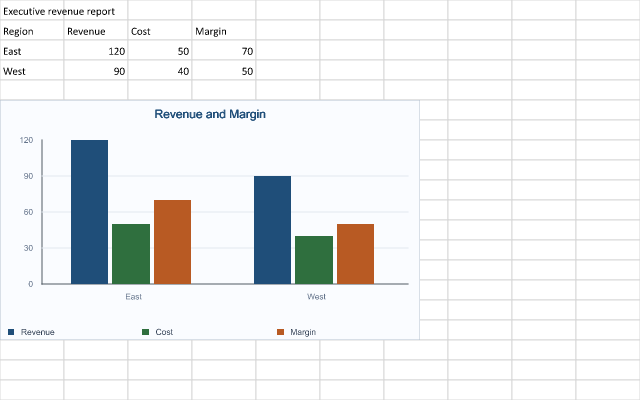
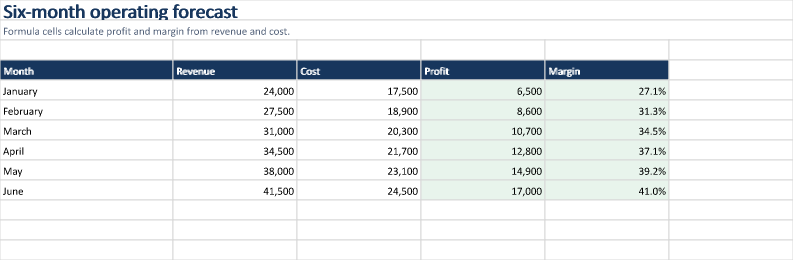
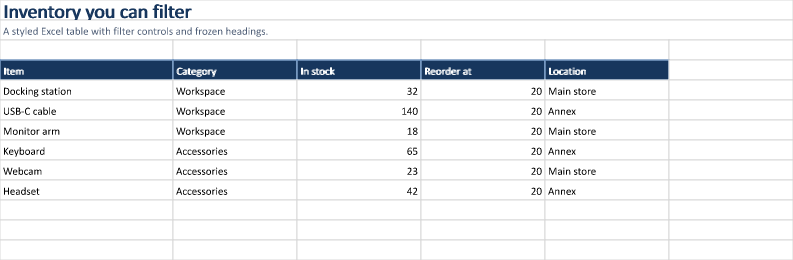
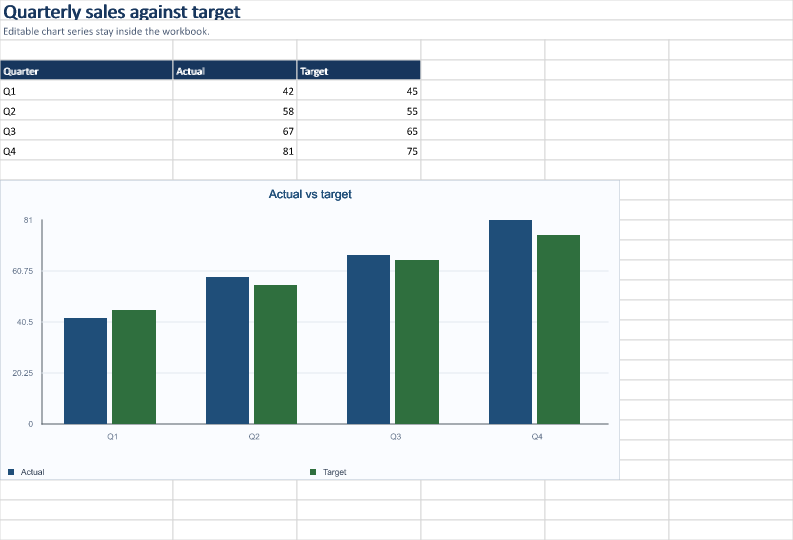
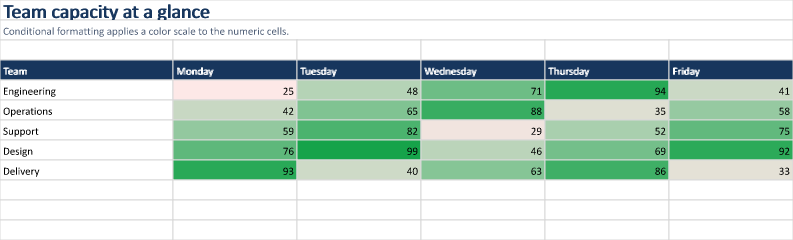
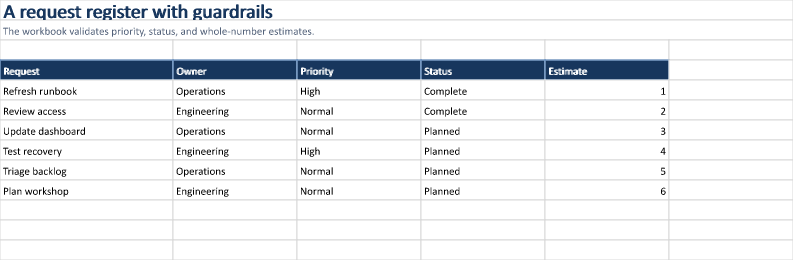
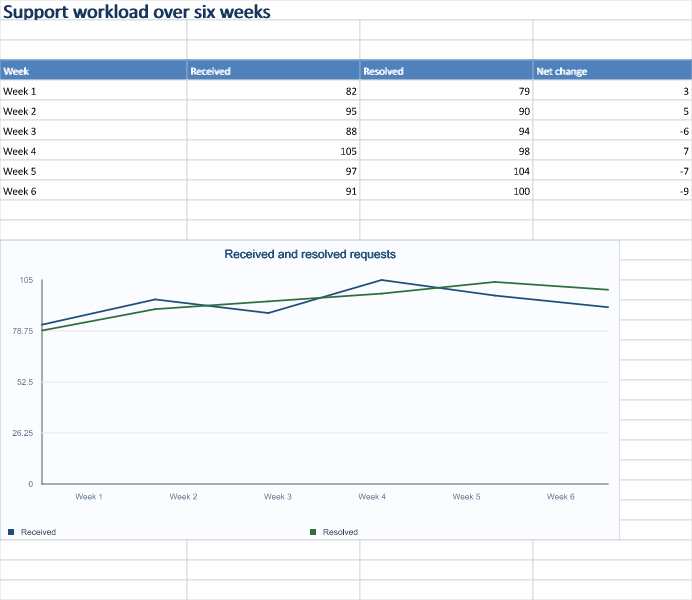
Create an editable workbook with typed values, formulas, a table, chart, and pivot metadata, then inspect export readiness before delivery.
The XLSX and PNG come from the same runnable example. The workbook is saved even when a downstream conversion preflight blocks an unsafe claim.
The bundled diagnostic shows the real boundary: first-party PDF export is blocked while pivot output exists only as pivot metadata instead of materialized cells.

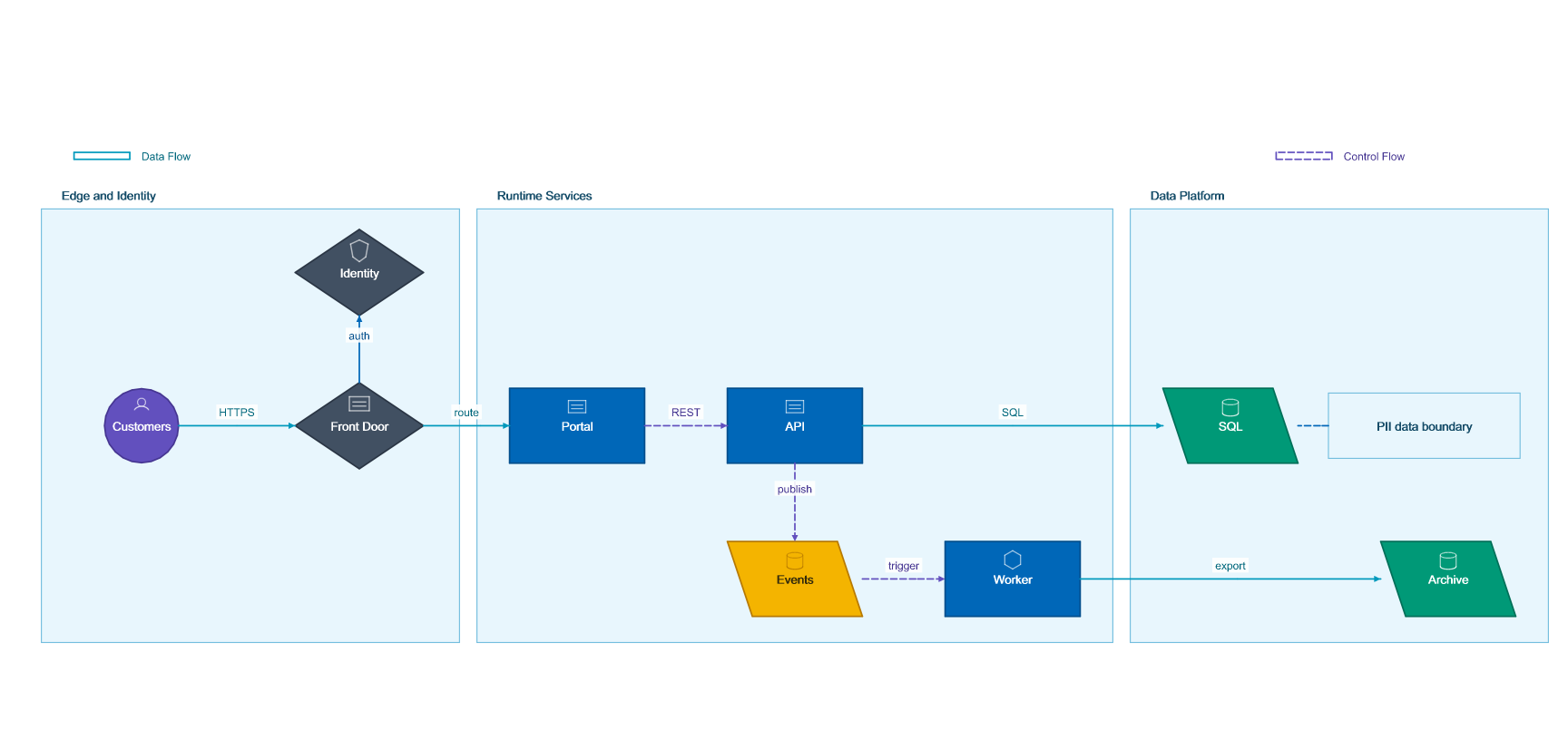
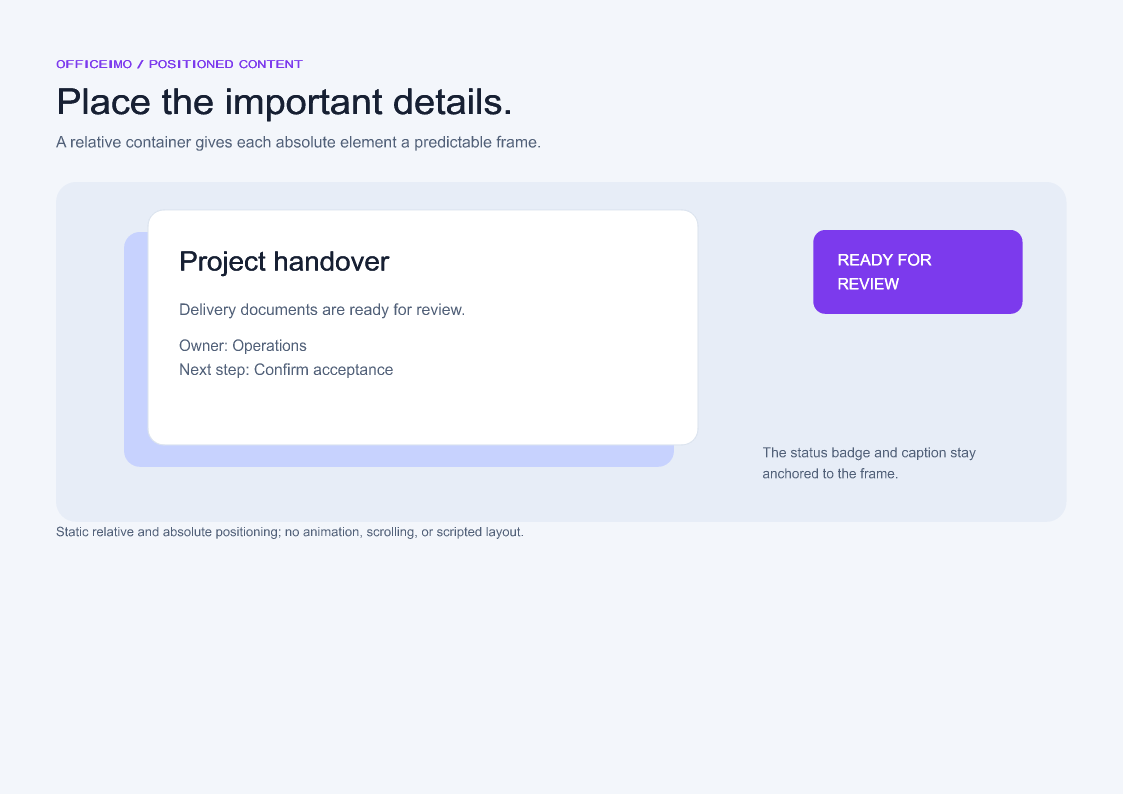
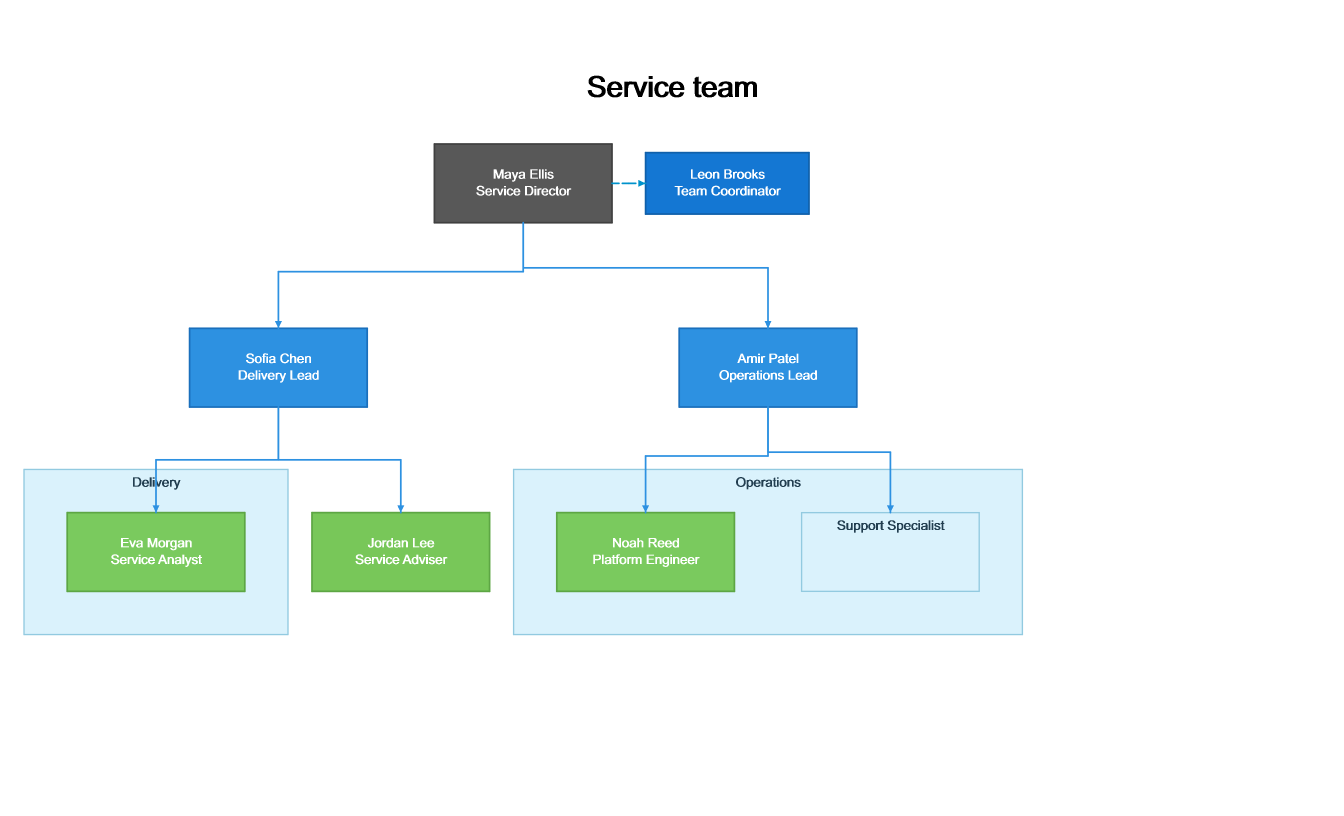
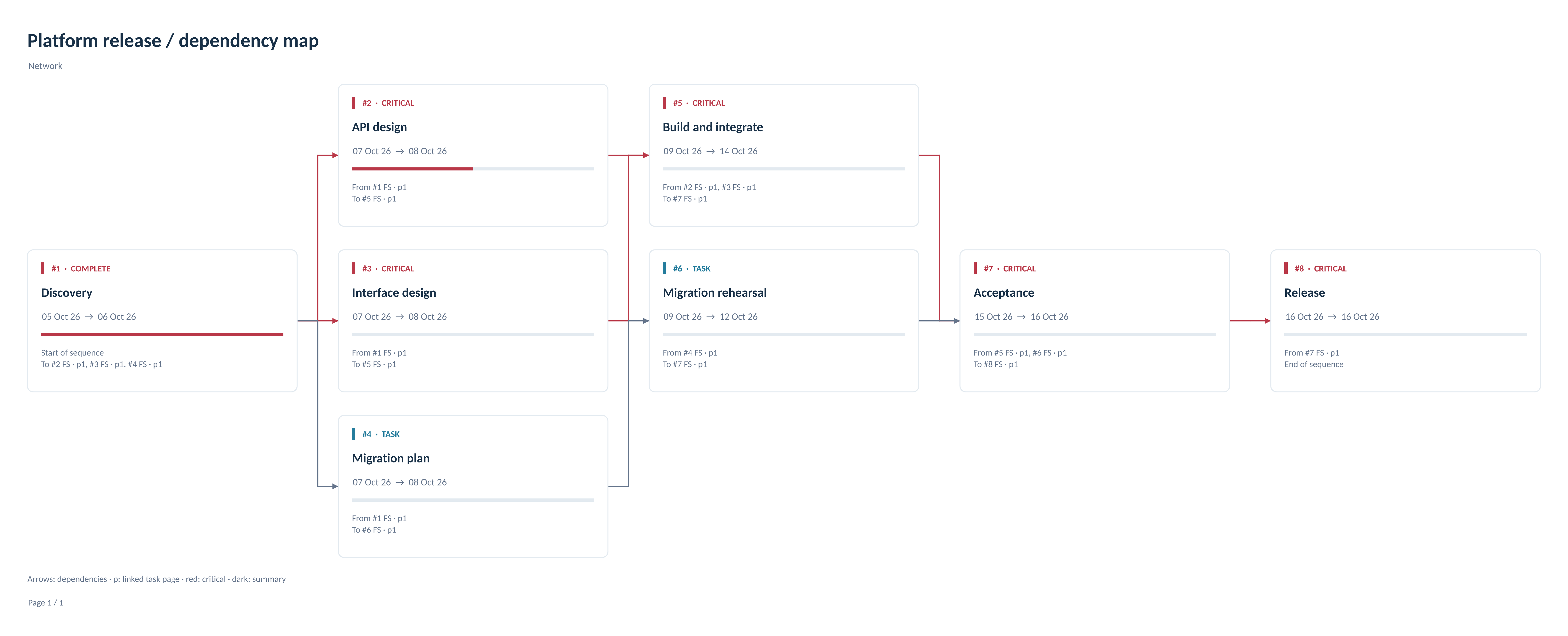
Turn topology data into an editable VSDX with pages, shapes, connectors, layers, labels, and repeatable layout.
The VSDX is generated and structurally validated by the premium gallery. The image is the approved native-renderer baseline for the same scenario.
The native preview is intended for CI and review. Microsoft Visio desktop remains the authority for exact stencil and desktop-rendering parity.
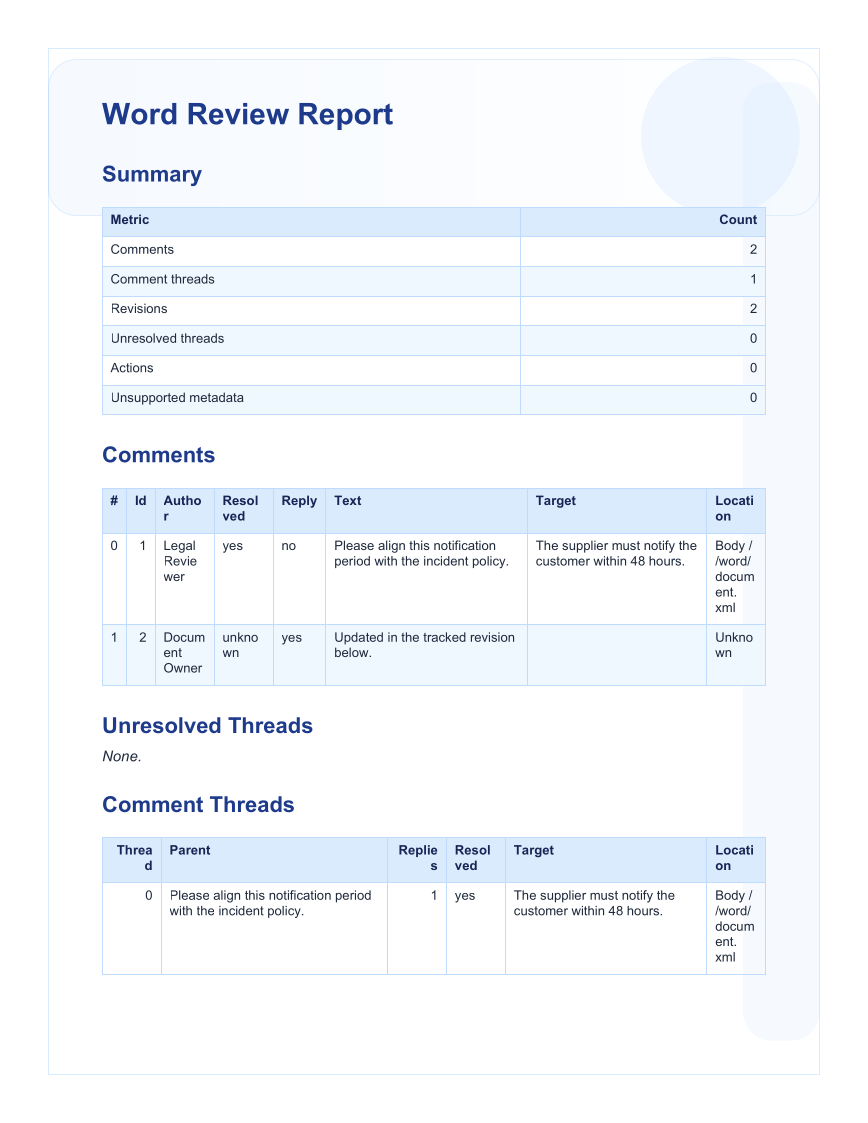
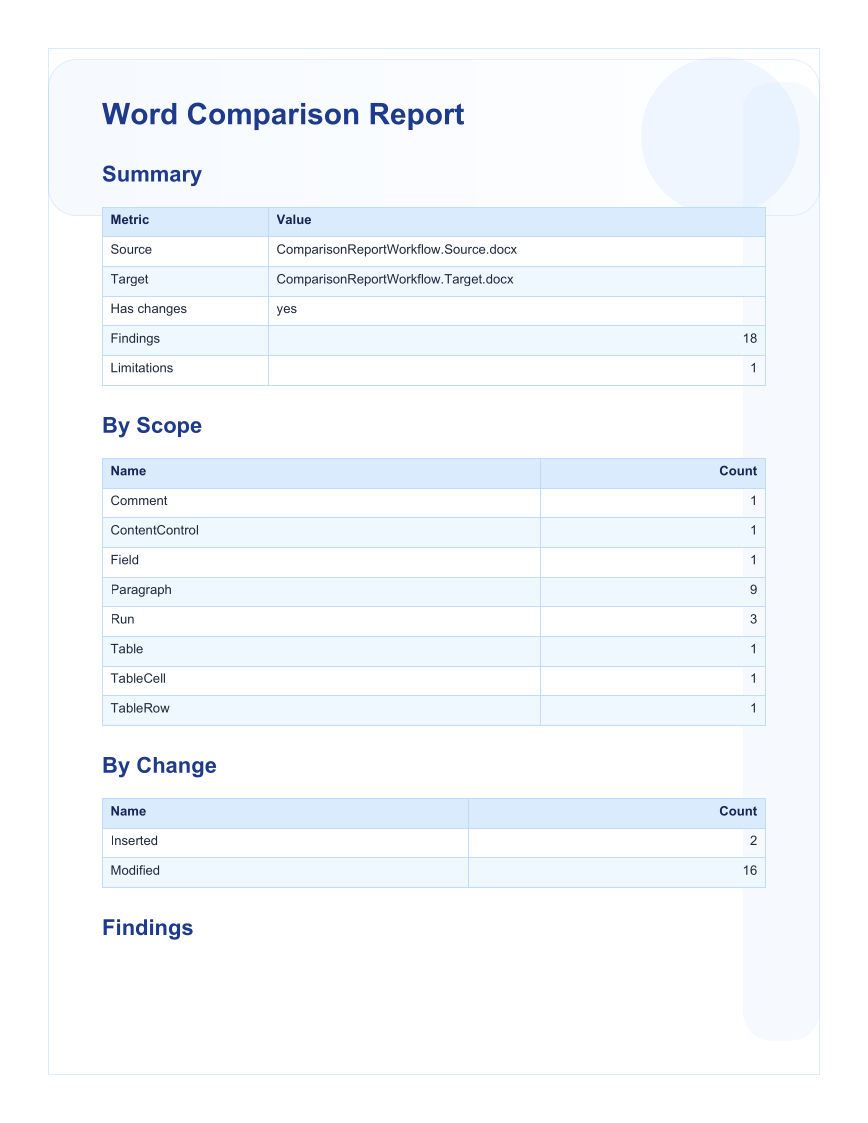
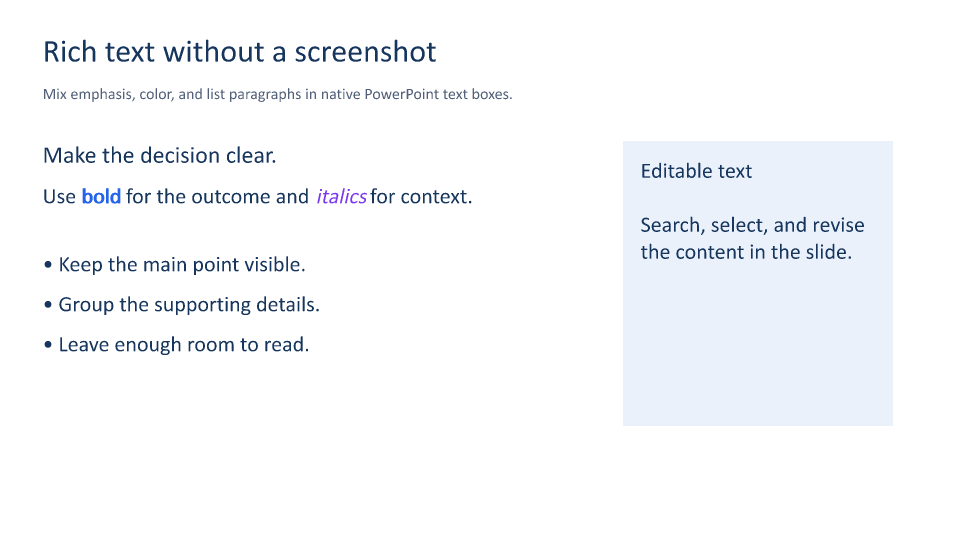
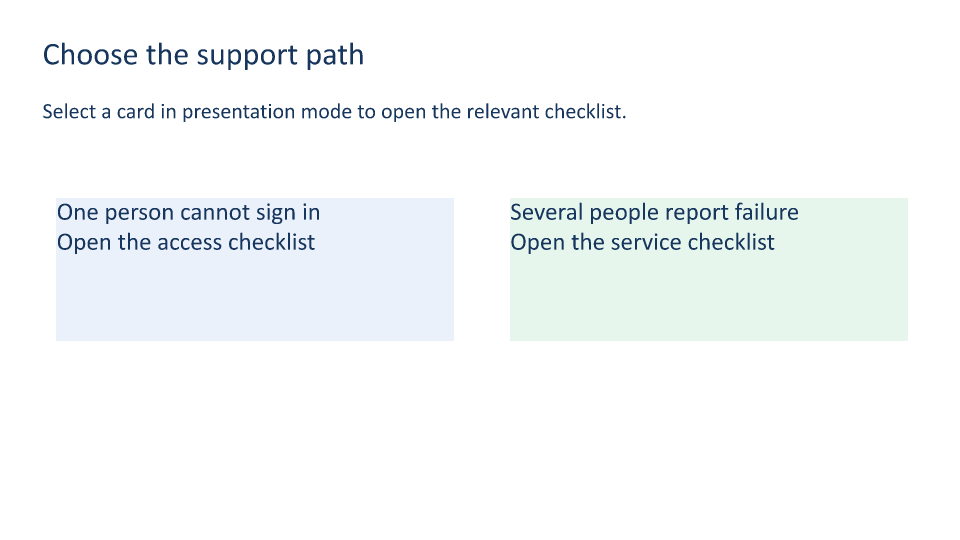
Detect a document, extract normalized Markdown and hierarchical chunks, and retain source hashes, locations, capabilities, and metadata.
The bundled schema-versioned JSON is generated by the OfficeIMO.Tool Reader command from the downloadable PowerPoint deck; the preview lists its four extracted slide headings.
Extraction preserves useful structure, not every visual placement. OCR and hosted providers are separate, explicitly configured capabilities.
OfficeIMO OneNote works entirely offline.
Create or read a native OneNote section, package it as ONEPKG, and export the same content to HTML, Markdown, PDF, or Reader text.
The preview reproduces the bundled HTML export. The downloadable ONEPKG and PDF are generated from the same in-memory section.
The offline model targets documented structures and supported page content; it does not claim complete OneNote desktop rendering or cloud-sync behavior.